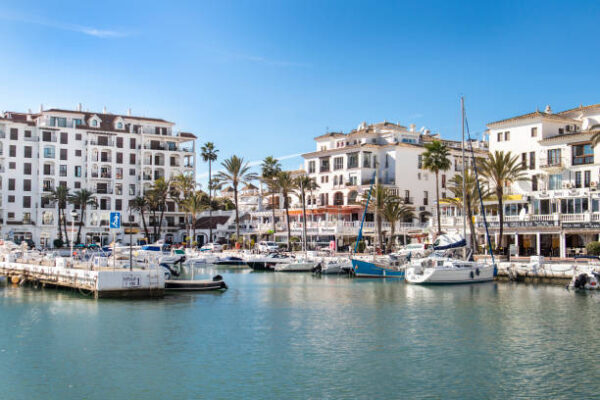
The western edge of the Costa del Sol is rapidly gaining attention, with Manilva emerging as one of the standout performers in Spain’s real estate market in early 2026. Long considered a quieter, more affordable alternative to neighbouring hotspots like Marbella and Estepona, the municipality is now experiencing a clear surge in both demand and transactional activity.
Market observers across the region report that price growth in Manilva is now among the strongest on the Costa del Sol, with double-digit annual increases becoming increasingly common. What was once viewed as a “value overflow” location is now establishing itself as a destination in its own right—driven by a mix of affordability, infrastructure improvements, and shifting buyer priorities.
A Market Rebalancing in Motion
The rise of Manilva is part of a broader rebalancing across Málaga province. As prices in established prime areas continue to climb, buyers—particularly international ones—are widening their search radius.
Marbella and Benahavís remain dominant at the top end of the market, but with pricing now firmly above €4,000/m² in many segments, a growing segment of buyers is being priced out of the traditional “Golden Triangle.”
This has created a ripple effect:
- Buyers move west to Estepona
- As Estepona tightens, demand spills further to Casares and Manilva
- Emerging areas begin to see accelerated price growth and reduced inventory
Manilva is now firmly within this chain reaction—but importantly, it is no longer at the beginning of it.
Demand Drivers: Who Is Buying?
Agents operating across the Costa del Sol consistently report that foreign buyers continue to play a dominant role, particularly from Northern Europe, the UK, and increasingly the US and Middle East.
In Manilva specifically, buyer profiles are evolving:
- Lifestyle buyers seeking quieter coastal living with proximity to Sotogrande
- Investors targeting capital growth and medium-term appreciation
- Remote workers prioritising space, views, and value over proximity to Marbella
This diversification of demand is helping stabilise the market and reducing reliance on any single buyer segment.
Supply Constraints Are Tightening
While demand is clearly rising, supply remains constrained—particularly for:
- New build developments with modern specifications
- Properties with sea views or frontline beach positioning
- Gated communities with amenities
Developers are active in the area, but construction timelines, planning constraints, and rising build costs are limiting how quickly new stock can reach the market.
This imbalance is contributing to upward pressure on prices and faster transaction cycles, particularly for well-positioned assets.
Costa del Sol Prices per m² (Notaries-Based Snapshot)
Below is a transaction-based snapshot of prices per square metre across key Costa del Sol locations, reflecting completed sales rather than asking prices:
| Area | €/m² (Approx. Notaries Data) |
|---|---|
| Marbella | €4,452 |
| Benahavís | €4,207 |
| Fuengirola | €3,657 |
| Estepona | €3,244 |
| Torremolinos | €3,208 |
| Benalmádena | €3,009 |
| Málaga (city) | €2,982 |
| Mijas | €2,747 |
| Casares | €2,528 |
| Manilva | €2,442 |
Source: Spanish Notaries (Consejo General del Notariado) via Bloy & Dawson analysis, March 2026
Despite its recent growth, Manilva still sits significantly below the Costa del Sol average, reinforcing its position as a relative value market—at least for now.
The Notary Data Lag: Why the Market May Be Ahead
It is important to understand that Notaries data reflects completed transactions, meaning many of these deals were agreed 12–24 months ago—particularly in the case of new developments.
As a result, current asking prices and negotiated deals in 2026 may already be exceeding the levels shown in the table.
This “lag effect” suggests that:
- The true current market value in Manilva may be higher than reported
- The pace of price growth could be accelerating faster than official datasets indicate
- Buyers relying solely on historical data risk underestimating competition
Outlook: From Emerging to Established
The key question now is not whether Manilva will grow—but how it will evolve as it matures.
Several trends are likely to define the next phase:
- Price convergence with Estepona as the gap narrows
- Greater segmentation within Manilva, with premium micro-locations outperforming
- Increased developer activity, though still constrained by planning and costs
- More institutional and semi-professional investors entering the area
In short, the market is transitioning from broad-based growth to more selective, asset-driven performance.
The NLS Conclusion
The NLS data confirms that Manilva is no longer an overlooked outlier—it is now a monitored and validated growth market within the Costa del Sol ecosystem.
Analysis of verified listings and matched transactions highlights a clear shift:
pricing, demand, and deal completion are increasingly aligned.
What TheNLS is seeing in real time:
- Faster deal cycles → Well-priced properties are transacting with reduced friction
- Higher verification rates → More listings are matching actual completed sales
- Performance divergence → Premium units (views, beachfront, quality developments) are outperforming averages by a widening margin
Strategic interpretation:
Manilva has entered mid-cycle acceleration, where data—not just location—determines outcomes.
For agents, developers, and investors working with TheNLS framework, this means:
- Identifying which properties are transacting—not just listed
- Tracking verified pricing trends rather than advertised prices
- Focusing on micro-location and product quality as key drivers of performance
Bottom line:
Manilva remains one of the strongest growth stories on the Costa del Sol in 2026—but it is no longer a simple value play. It is a data-driven market, where success increasingly depends on insight, verification, and precision.