Spain’s property market is undergoing one of the biggest structural transformations in modern European real estate history.
The traditional international buyer — once dominated by retirees purchasing holiday apartments on the coast — is rapidly disappearing.
In its place is a new global buyer profile driven by remote work, wealth migration, international mobility, entrepreneurship, and lifestyle optimisation.
And in 2026, that shift is fundamentally reshaping Spain’s housing market.
The International Buyer Has Changed Completely
A decade ago, many foreign purchases in Spain focused on:
- Holiday apartments
- Retirement homes
- Seasonal tourism properties
Today’s buyer profile looks very different.
Increasingly, international purchasers are:
- Entrepreneurs
- Tech founders
- Remote executives
- International investors
- Younger affluent families
- Digital business owners
This is creating a much deeper and more permanent form of international residential demand.
Remote Work Unlocked Lifestyle Migration
The rise of remote and hybrid work models changed global housing behaviour almost overnight.
High-income professionals are no longer tied permanently to traditional business capitals such as:
- London
- Amsterdam
- Stockholm
- Paris
- New York
Instead, many can now choose where they live based on lifestyle quality.
Spain became one of the biggest beneficiaries of this transformation.
Climate Became a Serious Economic Advantage
For many internationally mobile buyers, climate is no longer viewed as a luxury.
It is increasingly seen as part of long-term lifestyle and wellness strategy.
Spain offers:
- Year-round outdoor living
- Mediterranean lifestyle
- Lower-density environments
- Strong healthcare systems
- International connectivity
This combination is difficult for many Northern European cities to compete with.
Marbella Has Become the Symbol of This Shift
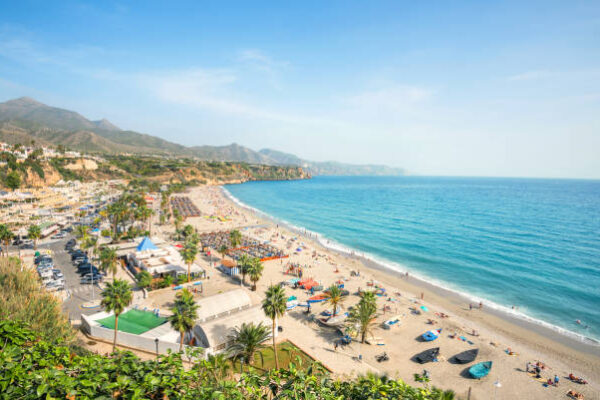
No market reflects this transformation more clearly than Marbella.
The Costa del Sol now attracts buyers from:
- United States
- Netherlands
- Scandinavia
- Germany
- Poland
- Middle East
- Eastern Europe
Many are not purchasing holiday homes.
They are building international lifestyles.
International Buyers Are Spending More Time in Spain
Historically, many foreign buyers spent only a few weeks annually in Spain.
Today, buyers increasingly:
- Spend several months per year in Spain
- Operate businesses remotely
- Relocate families semi-permanently
- Enrol children in international schools
- Integrate into local residential communities
This creates stronger year-round residential economies.
Luxury Real Estate Is Evolving Around Global Buyers
Developers are responding rapidly to this shift.
The strongest-performing sectors increasingly focus on:
- Contemporary architecture
- Energy efficiency
- Wellness amenities
- Smart-home systems
- Concierge services
- Branded residences
The product itself is becoming more international.
Supply Constraints Are Intensifying
The biggest challenge facing Spain’s premium residential markets is now supply.
International demand continues rising while prime inventory remains heavily constrained across regions such as:
- Marbella
- Ibiza
- Mallorca
- Madrid
- Barcelona
This imbalance is driving strong long-term price appreciation.
The NLS Conclusion
Spain’s international property market is no longer simply a tourism story.
At NLS, we believe the country is now benefiting from a much larger structural shift tied to global mobility, remote work, and wealth migration.
The buyers entering Spain today are fundamentally different from previous generations.
They are younger, wealthier, more internationally mobile, and increasingly focused on lifestyle quality rather than purely seasonal ownership.
That shift is transforming the country’s residential sector — especially in globally connected markets such as Marbella and the Costa del Sol.
Importantly, much of this demand appears long term rather than speculative.
And that may ultimately become one of the strongest foundations supporting Spain’s premium property market throughout the next decade.