For decades, the story of foreign property investment in Spain has been relatively straightforward.
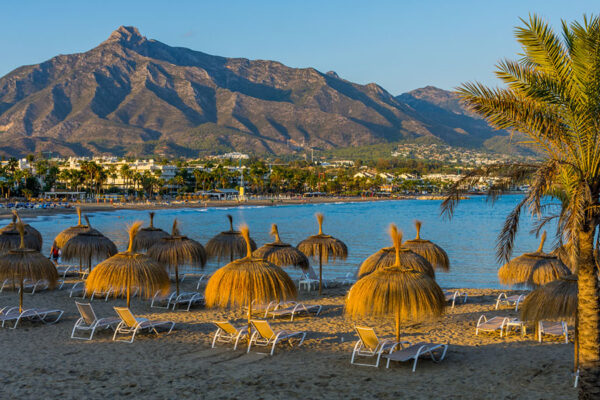
International buyers arrived seeking sunshine, beaches and Mediterranean lifestyles. They purchased homes on the Costa del Sol, Costa Blanca, Mallorca and the Canary Islands. Property values rose, tourism expanded and Spain became one of the world’s most successful second-home markets.
In 2026, however, a new trend is emerging.
A growing number of foreign buyers are no longer searching for the hottest destinations. Instead, they are searching for locations they believe will remain comfortable, liveable and resilient in a changing climate.
The result is the emergence of what some agents are now calling “climate migration real estate” — a growing market driven by concerns about extreme heat, water availability, sustainability and long-term quality of life. Galicia, in Spain’s northwest corner, has become the unexpected beneficiary of this shift. According to the Financial Times, international enquiries in parts of Galicia have surged, with buyers increasingly citing climate resilience as a major purchasing factor. ([Financial Times][1])
While the Costa del Sol, Mallorca and Costa Blanca remain dominant, the emergence of climate-conscious buyers raises an important question for the Spanish property industry:
Could climate migration become one of the defining real estate trends of the next decade?
A New Type of Foreign Buyer
Traditionally, foreign buyers focused on lifestyle.
Their priorities were predictable:
- Sunshine
- Beaches
- Golf
- Connectivity
- Rental potential
- Retirement planning
Today’s climate-conscious buyers still value lifestyle, but increasingly they are adding new criteria.
Emerging Buyer Priorities
| Traditional Buyer | Climate-Conscious Buyer |
|---|---|
| Sunshine | Moderate temperatures |
| Beach access | Water availability |
| Tourism | Sustainability |
| Holiday use | Long-term habitability |
| Rental returns | Climate resilience |
| Lifestyle | Future-proof living |
This does not mean buyers are abandoning coastal Spain.
Instead, it means some are diversifying where they purchase property.
Why Galicia Is Suddenly Attracting Attention
The Financial Times recently highlighted a growing trend among foreign buyers purchasing homes in Galicia, particularly along the Rías Baixas coastline. Buyers cited concerns ranging from heatwaves and water scarcity to political stability and food security. Some reported spending months analysing climate and environmental data before deciding where to buy. ([Financial Times][1])
For decades, Galicia was largely overlooked by international property investors.
Now that may be changing.
Galicia Advantages
| Factor | Rating |
|---|---|
| Water Security | Very High |
| Summer Temperatures | Moderate |
| Natural Environment | Excellent |
| Population Density | Low |
| Affordability | High |
| Climate Resilience | High |
Unlike southern Spain, Galicia experiences mild summers, abundant rainfall and relatively limited water stress.
For buyers worried about future climate conditions, these characteristics are becoming increasingly attractive.
The Climate Migration Theory
The idea behind climate migration is simple.
As climate conditions change, some populations gradually relocate toward regions perceived as more resilient.
Historically, this has largely been associated with developing countries.
Today, however, similar patterns are beginning to influence affluent buyers in Europe and North America.
According to agents operating in Galicia, foreign enquiries have increased significantly since the pandemic, with many prospective buyers explicitly mentioning climate concerns during their search process. ([Financial Times][1])
The profile of these buyers is notable.
They are not survivalists.
They are often:
- Retirees
- Remote workers
- Technology professionals
- Academics
- Entrepreneurs
Many are highly educated and approaching property purchases as long-term strategic decisions.
How This Compares to the Costa del Sol
For real estate professionals in Andalucía, climate migration may initially sound concerning.
The reality is more nuanced.
The Costa del Sol remains one of Europe’s strongest property markets.
Marbella, Estepona and Benahavís continue attracting international wealth at record levels.
However, buyer motivations are evolving.
Costa del Sol Strengths
| Factor | Rating |
|---|---|
| International Connectivity | Excellent |
| Luxury Market | Excellent |
| Tourism | Excellent |
| Lifestyle | Excellent |
| International Schools | Excellent |
| Climate Resilience | Moderate |
Many buyers still prioritise sunshine.
Others increasingly balance sunshine against heat.
This distinction may become more important over the next decade.
Mallorca Faces Similar Questions
Mallorca faces a slightly different challenge.
The island remains one of Europe’s most desirable luxury property destinations.
However, concerns regarding:
- Water resources
- Infrastructure pressure
- Tourism intensity
- Housing affordability
are becoming increasingly prominent.
The island’s limited size means environmental and climate considerations can have amplified impacts.
Yet scarcity also supports values.
This creates a complex dynamic.
The American Connection
One of the most fascinating aspects of climate migration is the role of American buyers.
Many Americans arriving in Spain are already familiar with climate-related concerns.
States such as:
- California
- Arizona
- Texas
- Florida
have experienced increasing debates surrounding heat, hurricanes, drought and insurance costs.
As a result, some American buyers appear particularly receptive to discussions around long-term environmental resilience.
The Financial Times highlighted examples of buyers conducting extensive climate analysis before selecting Galicia. ([Financial Times][1])
This behaviour could become increasingly common among affluent international purchasers.
Remote Work Changes Everything
Climate migration would be impossible without remote work.
Historically, buyers often needed to live near employment centres.
Today, many professionals can work from almost anywhere.
This dramatically expands location choices.
Remote Work Impact
| Before | Today |
|---|---|
| Job location critical | Lifestyle critical |
| Urban centres preferred | Regional centres viable |
| Daily commuting | Hybrid work |
| Limited geographic flexibility | Global flexibility |
This shift is one reason regions like Galicia are attracting attention.
Foreign Demand Remains Focused on the Costas
It is important not to exaggerate the trend.
Foreign demand remains overwhelmingly concentrated in traditional destinations.
Registradores and Notaries data continue to show that coastal markets attract the majority of foreign purchases. Foreign demand remains particularly strong in Andalucía, the Valencian Community and the Balearic Islands. ([Esentya Estate][2])
The Costa del Sol, Costa Blanca and Mallorca remain dominant.
Climate migration is not replacing traditional demand.
It is creating an additional layer of demand.
What This Means for Investors
Investors should pay attention for several reasons.
Emerging Opportunities
- Northern Spain visibility increasing
- Climate resilience becoming a market factor
- Demand diversification across Spain
- Increased international awareness of Galicia
- Potential appreciation in previously overlooked regions
Historically, many investors focused exclusively on tourism.
Future investors may increasingly evaluate climate resilience alongside tourism fundamentals.
Property Market Implications
The emergence of climate migration introduces a new variable into Spanish real estate.
Traditional Value Drivers
- Location
- Views
- Connectivity
- Amenities
- Rental potential
Emerging Value Drivers
- Water security
- Temperature moderation
- Environmental sustainability
- Food production capability
- Long-term climate resilience
These factors are unlikely to replace traditional considerations.
However, they may increasingly complement them.
Could Climate Migration Affect the Costa del Sol?
The answer is yes, but probably not in the way many assume.
Climate migration is unlikely to trigger a mass exodus from southern Spain.
The Costa del Sol’s advantages remain overwhelming.
Instead, the region may adapt.
Future developments may increasingly emphasise:
- Water efficiency
- Sustainability
- Energy independence
- Green infrastructure
- Climate adaptation
Developers who incorporate these themes could gain competitive advantages.
What Real Estate Agents Should Watch
Agents across Spain should monitor several emerging indicators.
Key Signals
| Indicator | Importance |
|---|---|
| Climate-focused enquiries | High |
| Water availability questions | High |
| Sustainability requirements | Growing |
| Energy efficiency demand | High |
| Interest in northern Spain | Growing |
Many of these conversations were virtually nonexistent ten years ago.
Today they are becoming increasingly common.
NLS Conclusion
Climate migration is no longer a theoretical concept.
It is beginning to influence real estate purchasing decisions in Spain.
While the Costa del Sol, Mallorca and Costa Blanca remain dominant destinations for international buyers, a growing number of purchasers are evaluating locations through a different lens. They are asking not only where they want to live today, but where they believe they will want to live twenty years from now.
Galicia’s growing popularity among climate-conscious buyers provides an early indication of how this trend may develop. Cooler temperatures, abundant water resources and lower population density are increasingly viewed as assets rather than disadvantages. ([Financial Times][1])
For the Costa del Sol, this does not represent a threat. Rather, it represents a signal.
The future of Spanish real estate may increasingly belong to locations capable of combining lifestyle, connectivity and climate resilience.
The Costa del Sol remains exceptionally well positioned because of its infrastructure, international reputation and luxury market strength. However, developers, investors and agents who understand the growing importance of sustainability and environmental resilience may find themselves ahead of the market.
The next decade is unlikely to be defined solely by sunshine and beaches.
Increasingly, it may also be defined by how buyers perceive long-term quality of life in a changing world.
For Spain’s property market, climate migration could become one of the most important emerging trends of the 2030s.
Sources
- Financial Times, May 2026
- Spanish College of Registrars (Registradores)
- Consejo General del Notariado
- Idealista
- European Commission Climate Risk Assessments
- INE
- Galicia Regional Statistics Institute