Sources: Registradores de España (Q1 2026), Consejo General del Notariado, Reuters (April 2026), Idealista, El País, Financial Times, market data published during Q1 and Q2 2026. (Idealista)
Spain’s Coastal Property Market Has Changed
Walk through Marbella’s Golden Mile, the waterfront developments of Estepona, the luxury villas of Andratx in Mallorca or the growing new-build communities of Alicante, and one thing becomes immediately clear: Spain’s coastal property market is becoming more international than ever before.
Foreign buyers have long played a significant role in Spain’s residential property sector. However, 2026 marks a distinct turning point. The profile of the international purchaser is changing, and with it, the dynamics of some of Spain’s most important housing markets.
According to data released by Registradores de España, foreign buyers accounted for almost 25,000 property purchases during the first quarter of 2026 alone, remaining one of the key pillars supporting Spain’s housing market despite record prices and a slight moderation in transaction volumes. (Idealista)
What is particularly notable is not simply the volume of foreign demand, but where it is coming from and why these buyers are choosing Spain.
The traditional image of the retired British couple searching for a holiday apartment remains relevant, but it is no longer the dominant story.
A new generation of international buyers is emerging.
The American Buyer Arrives
Perhaps the biggest shift over the past two years has been the rapid rise of American buyers.
Historically, Americans represented only a small share of Spain’s international property market. Distance, limited market familiarity and stronger domestic alternatives meant Spain often sat behind destinations such as Florida, California and the Caribbean.
That situation is changing rapidly.
Reuters reported in April 2026 that American purchases of Spanish property rose again during 2025, with buyers increasingly targeting premium and luxury segments across Madrid, Valencia and the Costa del Sol. Americans now account for roughly 2% of all property purchases in Spain, a figure that has tripled over the past six years. (Reuters)
The attraction is easy to understand.
Many affluent American buyers compare Marbella not with traditional European destinations but with Miami, Palm Beach, Newport Beach or Aspen. When viewed through that lens, Spain often appears remarkably good value.
Luxury villas that might command €15 million or €20 million in parts of California can often be acquired in Marbella for a fraction of that amount while offering Mediterranean lifestyle advantages, lower living costs and access to Europe.
Industry professionals across the Costa del Sol increasingly report that American buyers are no longer occasional purchasers. They are becoming a major force in the luxury market.
Dutch Buyers Become One of Spain’s Rising Forces
While the growth of American demand attracts headlines, another nationality has quietly become one of the fastest-growing groups of foreign purchasers in Spain: the Dutch.
Recent market reports show Dutch buyers steadily increasing their presence across the Costa del Sol, Costa Blanca and parts of the Balearics. (Idealista)
The reasons are both economic and lifestyle driven.
Property prices in many Dutch cities have experienced significant appreciation over the past decade, creating substantial equity among homeowners. Combined with growing remote-working flexibility and strong air connectivity, Spain has become an attractive option for Dutch families seeking more space, better weather and a higher quality of life.
Unlike traditional holiday-home buyers, many Dutch purchasers are relocating for substantial portions of the year.
They are enrolling children in international schools, establishing businesses and integrating into local communities.
This shift represents a more permanent form of migration than previous waves of second-home ownership.
Brexit Has Not Stopped British Demand
Despite years of predictions suggesting Brexit would weaken British demand, the UK remains one of the most influential forces in Spanish real estate.
British buyers continue to dominate many coastal markets, particularly along the Costa del Sol and Costa Blanca.
The reasons are straightforward.
Spain remains deeply familiar to British purchasers. Decades of tourism, established expatriate communities, extensive flight networks and strong cultural ties continue to support demand.
Many British buyers also possess a level of confidence in the Spanish market that newer nationalities have yet to develop.
For them, buying in Spain is not a leap into the unknown.
It is often the continuation of a relationship that has existed for decades.
The result is remarkable resilience.
Even after Brexit, British demand remains one of the most important components supporting Spain’s coastal property markets. (PCC Property)
Marbella Leads the Luxury Race
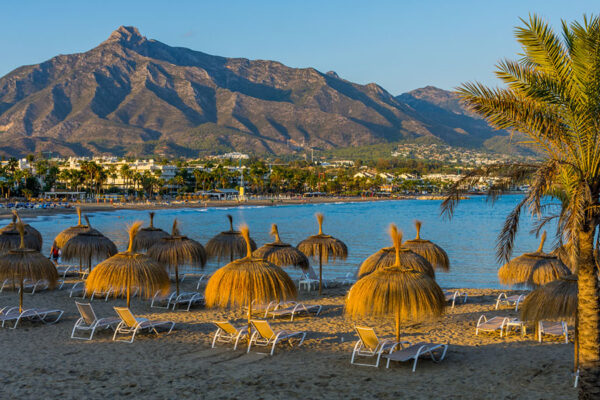
If there is one location that best illustrates the changing face of international demand, it is Marbella.
Data published by Spanish notaries in June 2026 showed Marbella once again among the most expensive residential markets in the country, with some prime locations exceeding €18,000 per square metre. (El País)
The city increasingly competes not with other Spanish destinations but with global luxury hubs.
International uncertainty has further accelerated this trend. Market reports published during 2026 indicate that luxury demand in Marbella and the wider Golden Triangle of Marbella, Estepona and Benahavís has increased significantly as wealthy buyers seek politically stable, secure and lifestyle-oriented destinations. (Cadena SER)
The buyer profile is also broadening.
Americans, Dutch, Scandinavians, Middle Eastern investors, Germans and British purchasers are all active participants in the market.
Marbella is no longer simply a luxury destination.
It is increasingly becoming a global wealth hub.
Mallorca Continues to Attract Europe’s Wealth
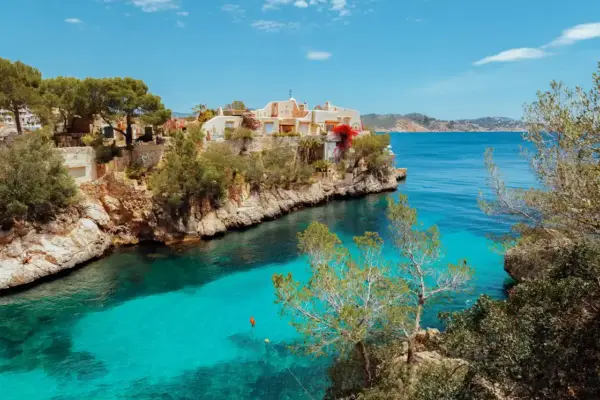
Mallorca has experienced a similar evolution.
The island remains one of Europe’s most sought-after lifestyle destinations, particularly among German-speaking buyers, Northern Europeans and increasingly international investors from further afield. (Balearic Properties)
Limited supply remains one of Mallorca’s defining characteristics.
Unlike many mainland destinations, the island faces natural restrictions on expansion. This scarcity has helped support values, particularly in premium locations such as Andratx, Calvià and Son Vida.
Recent notary data highlighted transactions exceeding €5 million in some of Mallorca’s most prestigious municipalities. (El País)
While political discussions around housing affordability continue to generate headlines, international demand remains extremely resilient.
For many wealthy buyers, Mallorca represents a rare combination of exclusivity, security, accessibility and long-term capital preservation.
The Costa Blanca’s Quiet Transformation
Perhaps the most underrated story in Spanish real estate is unfolding along the Costa Blanca.
Historically viewed as a value alternative to the Costa del Sol, Alicante province has experienced significant growth in both prices and international demand.
Foreign buyers now account for an exceptionally high proportion of transactions in parts of the province, with Dutch, Belgian, German, Scandinavian and British purchasers playing a major role in market activity. (morairainvest.com)
The region benefits from strong infrastructure, international airports, healthcare facilities and comparatively affordable pricing relative to Marbella and Mallorca.
As a result, it is increasingly attracting buyers who might previously have focused exclusively on southern Andalucía.
The Rise of Lifestyle Migration
The most important trend connecting all three regions is the rise of lifestyle migration.
The foreign buyer of 2026 is often younger, more mobile and more internationally minded than previous generations.
Remote working, entrepreneurship, flexible business structures and global wealth mobility have changed how people think about where they live.
Increasingly, buyers are choosing locations based on lifestyle rather than proximity to employment.
Spain’s coastal regions are among the biggest beneficiaries of this shift.
Sunshine, safety, healthcare, connectivity and international infrastructure combine to create a compelling proposition that few competing markets can match.
NLS Conclusion
The story of Spain’s property market in 2026 is not simply one of rising prices or strong foreign demand.
It is the story of a structural transformation.
Americans are entering the market in growing numbers. Dutch buyers are becoming one of the fastest-rising nationalities. British purchasers remain a powerful force despite Brexit. Meanwhile, Marbella, Mallorca and the Costa Blanca are evolving from holiday-home destinations into internationally recognised lifestyle and wealth hubs.
For estate agents, developers and investors, understanding this shift will be critical over the coming years.
The agencies that succeed will be those that recognise today’s foreign buyer is not simply purchasing a second home. They are often buying a new base, a new lifestyle and, in many cases, a new future.
At The NLS, we believe the internationalisation of Spain’s coastal markets remains one of the most important long-term trends shaping the country’s real estate sector. As global wealth becomes increasingly mobile, the Costa del Sol, Mallorca and Costa Blanca appear exceptionally well positioned to remain among Europe’s leading destinations for international property investment.
This version is much closer to a WSJ/Financial Times/NLS editorial style and is ready for publication.