Foreign Buyer Ranking in Spain: #3
Market Share: 6.65% of all foreign property purchases
Source: Colegio de Registradores – Estadística Registral Inmobiliaria (ERI) Q4 2025
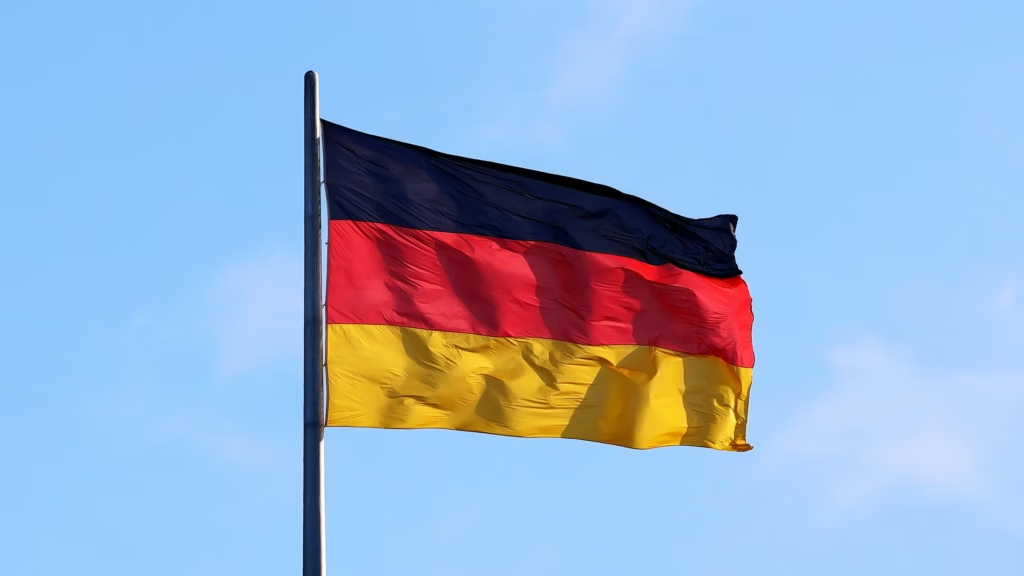
Germany remains the third-largest foreign buyer of property in Spain, accounting for 6.65% of all international real estate transactions.
At 6.65%, German demand sits just behind the Netherlands and within close proximity of the UK – Spain’s largest foreign buyer nationality.
Unlike rapidly expanding markets, Germany does not represent acceleration in Spain’s property market.
It represents durability.
German participation in Spain is not cyclical enthusiasm.
It is structural entrenchment within Spain’s coastal and island real estate ecosystem.
A Decades-Long German–Spain Property Relationship
German demand for Spanish property is deeply rooted.
For generations, German buyers have gravitated toward prime lifestyle and coastal markets, including:
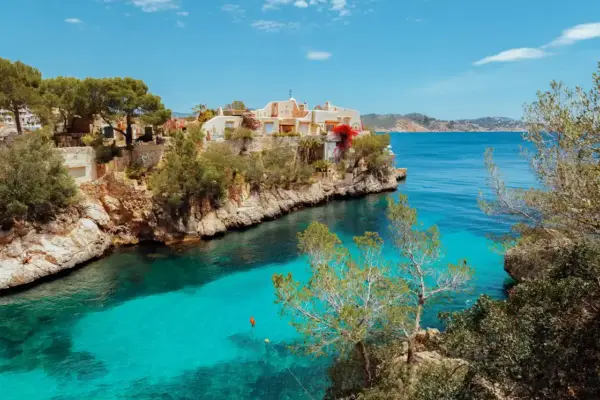
- Mallorca and the Balearic Islands
- Costa Blanca
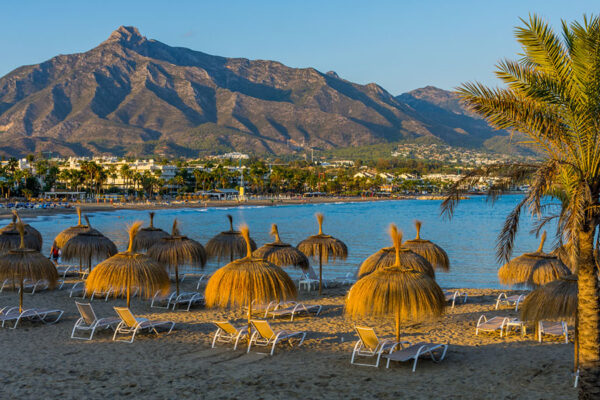
- Costa del Sol
- Canary Islands
In certain municipalities of Mallorca, German ownership has shaped entire micro-markets within Spain’s premium property sector.
Local services, international schooling, legal advisory infrastructure, resale liquidity, and brokerage ecosystems have evolved around sustained German participation.
This is not short-term tourism demand.
It is long-term ecosystem demand within Spain’s residential property market.
Wealth Stability and Conservative Capital Allocation
Germany remains Europe’s largest economy, and German households traditionally demonstrate:
- High savings rates
- Conservative debt structures
- Long-term wealth planning
- Risk-adjusted capital allocation
German buyers typically enter Spain’s property market with strong liquidity positions.
Mortgage usage exists – but leverage is measured and carefully structured.
This produces transaction stability across Spain’s premium coastal real estate markets.
German buyers rarely overextend.
They prioritise asset quality, legal certainty, and structural condition over transaction speed.
Strategic Geographic Concentration in Spain’s Coastal Property Markets
German demand is highly concentrated and strategically segmented across Spain’s Mediterranean and island property markets.
Mallorca and the Balearic Islands
Mallorca is arguably the most structurally German-influenced micro-market in Spain.
German buyers dominate segments such as:
- Premium luxury villas
- Renovated fincas
- Coastal apartments in established municipalities
This market is characterised by:
- Strong pricing discipline
- High resale liquidity
- Deep legal and advisory infrastructure
In several areas, German-speaking services are fully integrated into the local real estate ecosystem, significantly reducing transactional friction.
Costa Blanca (Alicante Province)
German demand in the Costa Blanca property market focuses on:
- Established urbanisations
- Strong infrastructure access
- Stable resale environments
Compared to Dutch buyers, German purchasers often show greater sensitivity to:
- Build quality
- Long-term structural condition
- Renovation and compliance risk
Due diligence is detailed and documentation-driven.
Costa del Sol (Málaga Province)
On the Costa del Sol, German buyers are present but more selective than British buyers.
They gravitate toward:
- Modern developments
- Established premium communities
- Properties with clear legal status and verified documentation
Legal transparency and compliance significantly influence purchasing decisions.
Canary Islands
The Canary Islands remain attractive to German buyers due to:
- Climate stability
- Direct aviation connectivity with Germany
- Lower seasonality compared to mainland markets
This supports long-term lifestyle usage rather than short-term speculative investment.
Behavioural Profile: Methodical, Analytical and Compliance-Oriented
German buyers are among the most process-driven participants in Spain’s foreign property market.
They typically:
- Conduct extensive pre-travel market research
- Request documentation early in negotiations
- Scrutinise building legality and urban planning compliance
- Evaluate community governance structures
- Compare total transaction costs in detail
Tolerance for ambiguity is low.
When properties appear duplicated across agencies with conflicting descriptions or inconsistent data, it signals systemic weakness.
Trust declines quickly.
Professionalism determines conversion in this segment.
Competitive Position Within Northern European Demand
Germany competes directly with:
- The UK (#1 foreign buyer in Spain)
- The Netherlands (#2)
- Belgium (#8)
Unlike the Netherlands – which is currently experiencing upward momentum Germany’s market share remains stable.
It does not surge.
It anchors.
This stability provides resilience in municipalities where volatility might otherwise emerge.
In Mallorca in particular, German demand underpins pricing floors within premium property segments.
Market Impact on Spain’s Premium Real Estate Sector
German participation reinforces:
- Premium pricing stability
- Long holding periods
- High build-quality expectations
- Structured legal compliance
- Strong resale liquidity
Because German buyers often retain property for extended periods, they reduce speculative churn in Spain’s coastal markets.
They stabilise communities.
They anchor long-term value.
Forward Outlook: Structural Stability Over Cyclical Growth
Germany’s outlook within Spain’s foreign property market is steady rather than explosive.
Key structural drivers supporting continued participation include:
- Germany’s economic scale
- Cultural familiarity with Spain
- Established aviation links
- Long-standing expatriate infrastructure
Even during broader European slowdowns, German outbound property interest in Spain tends to persist – although transaction velocity may moderate.
Germany is not a growth spike.
It is a foundation layer within Spain’s coastal real estate landscape.
The NLS Conclusion: Mature Buyers Require Structured Property Systems
German buyers originate from one of Europe’s most regulated and systemised property environments.
They expect:
- Clear listing ownership
- Precise and verified documentation
- Defined agency representation
- Minimal duplication
- Structural transparency
Spain’s historically fragmented multi-listing exposure can create friction for this segment.
A structured verification framework aligns directly with German expectations by:
- Verifying property identity
- Reducing listing duplication
- Clarifying representation structures
- Introducing visible professionalism signals
For German buyers, system integrity is not optional.
It is prerequisite.
Markets that feel structured convert German demand more efficiently.
Structure is stability.