A Turning Point in Global Property Markets
The comparison between the Costa del Sol and Dubai has taken on new relevance in 2026, as emerging signs of softening in Dubai’s property market contrast with continued upward pressure on prices in southern Spain.
Recent data suggests that global real estate dynamics are shifting — with capital beginning to reposition from high-growth, cyclical markets into more stable, supply-constrained regions.
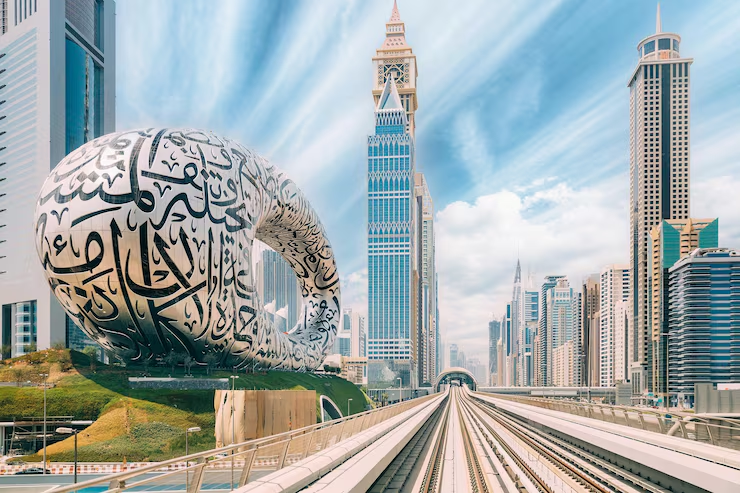
Dubai: From Rapid Growth to Market Cooling
After several years of exceptional growth — with prices rising by as much as 60% between 2022 and early 2025 — Dubai’s property market is now entering a more cautious phase.
In early 2026, multiple indicators point to a slowdown:
- Transaction volumes dropped 37% year-on-year and 49% month-on-month in March
- Some sellers are offering discounts of 12–15% to secure deals
- Analysts warn of potential price declines of up to 7% annually in downside scenarios
At the same time, supply is rising sharply, with tens of thousands of new units entering the market — placing additional pressure on pricing and rental yields.
Growth is also moderating structurally. Annual price increases, which previously reached ~38% in the luxury segment, have already slowed significantly, with further moderation expected through 2026.
Key takeaway:
Dubai is transitioning from a high-growth expansion phase into a more balanced — and potentially corrective — cycle.
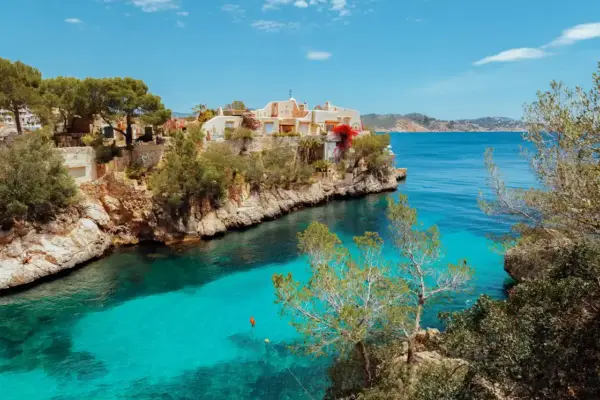
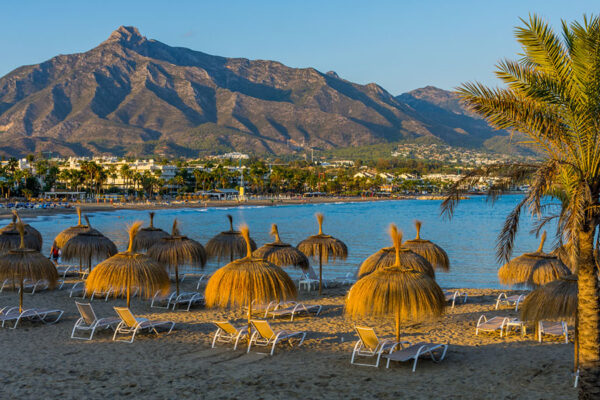
Costa del Sol: Demand Strengthens Amid Limited Supply
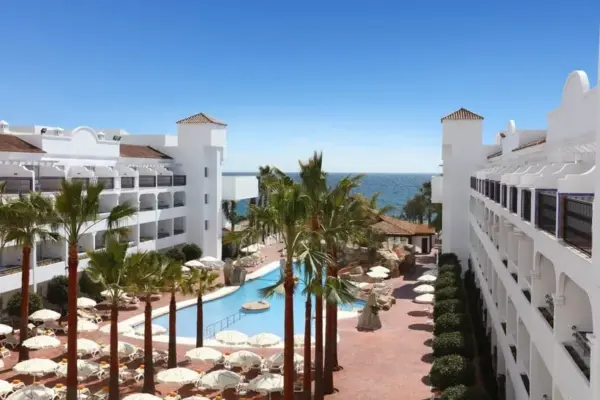
In contrast, the Costa del Sol continues to demonstrate strong price resilience and upward momentum.
- Property prices are rising rapidly across the region in 2026
- Some areas are recording double-digit annual growth
- Demand continues to exceed available supply, particularly in prime coastal locations
This imbalance is structural:
- Limited land availability (especially beachfront)
- Slow development pipelines
- Consistent international demand
At a national level, prices are also expected to continue rising through 2026, albeit at a more moderate pace — reinforcing Spain’s position as a stable growth market rather than a speculative one.
How the Dubai Dip Is Impacting the Costa del Sol
The softening in Dubai is beginning to influence global buyer behaviour — particularly among international investors.
As uncertainty increases in Dubai due to:
- Market cycle fatigue
- Rising supply
- Geopolitical sensitivity
- Price corrections
👉 Buyers are becoming more selective and risk-aware.
This is driving a reallocation of capital toward markets offering:
- Stability
- Lifestyle appeal
- Long-term value
The Costa del Sol is emerging as a direct beneficiary of this shift.
Industry analysis indicates that when confidence weakens in more volatile markets, investors tend to redirect toward established European destinations, particularly those with strong fundamentals and limited supply.
Investment Profiles: Diverging Strategies
The divergence between the two markets is becoming clearer:
Dubai
- Higher rental yields (typically ~6–9%)
- Faster growth cycles
- Increased exposure to volatility and external shocks
Costa del Sol
- Lower but more stable yields (~5–6%)
- Consistent long-term appreciation
- Supply-driven price support
This shift reflects a broader global trend:
👉 From aggressive return-seeking → to capital preservation and lifestyle-driven investment
Buyer Behaviour in 2026
The current market environment is producing a more disciplined and selective buyer.
According to market analysts:
- Buyers are becoming more cautious after rapid price increases
- Affordability and long-term value are increasingly important
- Demand remains strong in locations with proven resilience and lifestyle appeal
On the Costa del Sol, this is translating into:
- Faster sales in prime areas
- Increased competition for limited inventory
- Continued upward pressure on pricing
NLS Conclusion
The global real estate landscape in 2026 is no longer defined purely by growth — but by stability, resilience, and long-term positioning.
- Dubai is entering a phase of price moderation and market recalibration
- The Costa del Sol continues to benefit from structural demand and limited supply
As capital becomes more selective, the Costa del Sol is increasingly positioned not just as an alternative — but as a preferred destination for long-term real estate investment in Europe.
Sources:
Colegio de Registradores, Tinsa IMIE Index, Global Property Guide, Spanish Notaries, SER Málaga, International Property Alerts (2025–2026)