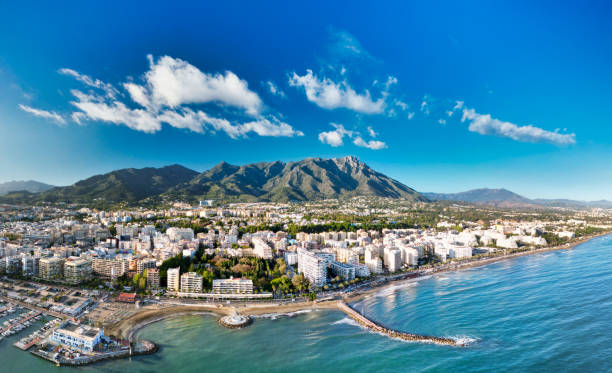
Marbella is no longer simply a luxury destination for British retirees and European holiday-home buyers.
In 2026, the Costa del Sol’s most famous property market has evolved into one of the world’s most internationally diversified residential ecosystems — attracting globally mobile wealth from across Europe, North America, the Middle East, and beyond.
The city’s transformation has accelerated dramatically over the past five years, driven by lifestyle migration, remote working, international entrepreneurship, and growing demand for secure, climate-driven luxury living.
Today, Marbella competes not just with Mediterranean resort destinations, but with global luxury hubs such as Miami, Dubai, Lisbon, Monaco, and the South of France.
And behind that transformation are several key buyer nationalities reshaping the market in real time.
1. British Buyers — Still the Market Backbone
Despite Brexit-related challenges, British buyers remain one of Marbella’s most dominant buyer groups.
The UK market continues driving demand for:
- Luxury villas
- Golf properties
- Retirement relocation
- Family homes
- Lifestyle investment
British buyers now increasingly focus on higher-quality, long-term lifestyle assets rather than purely seasonal holiday homes.
2. Dutch Buyers — Marbella’s Fastest-Growing Luxury Segment
Dutch demand has exploded across Marbella and Estepona over the past three years.
Driven by remote work flexibility, strong purchasing power, and lifestyle migration trends, Dutch buyers are rapidly becoming one of the Costa del Sol’s most influential demographics.
Many are younger professionals and entrepreneurs seeking:
- Modern architecture
- Energy-efficient homes
- International schooling
- Year-round living environments
3. American Buyers — Small in Volume, Massive in Impact
American buyers are reshaping Marbella’s ultra-prime sector.
Although they still represent a smaller share of total transactions, US buyers are among the highest spenders per square metre in the market.
Demand is strongest for:
- Branded residences
- Contemporary villas
- Fully turnkey luxury homes
- Wellness-oriented developments
Marbella is increasingly being viewed by affluent Americans as Europe’s answer to Miami or Palm Beach.
4. Scandinavian Buyers — Lifestyle Migration Leaders
Swedish, Norwegian, and Danish buyers continue playing a major role in Marbella’s evolution.
Scandinavian demand is heavily concentrated around:
- Sustainable developments
- Wellness living
- Family relocation
- Long-stay ownership
Remote work flexibility has accelerated Scandinavian migration patterns dramatically.
5. German Buyers — Stability and Long-Term Wealth
German buyers remain one of Marbella’s most financially stable buyer groups.
They continue focusing on:
- Prime locations
- Build quality
- Sustainability
- Long-term asset preservation
German demand is particularly important in premium villa and luxury apartment sectors.
6. Polish Buyers — Marbella’s Emerging Growth Story
Polish buyers are becoming one of the fastest-growing demographics entering Marbella’s residential market.
Younger affluent professionals, entrepreneurs, and internationally mobile families are increasingly targeting modern new-build developments across the Costa del Sol.
7. Middle Eastern Buyers — Growing Quietly
Marbella’s luxury infrastructure is increasingly attracting Middle Eastern wealth.
Privacy, security, hospitality standards, and luxury lifestyle services are all strengthening the city’s appeal among Gulf buyers and family offices.
8. Swiss Buyers — Quiet but Extremely Powerful
Swiss buyers remain heavily concentrated within Marbella’s ultra-prime market.
They are particularly active in:
- La Zagaleta
- Sierra Blanca
- Golden Mile
- Gated luxury communities
Swiss purchasers often prioritise security, privacy, and capital preservation.
9. Ukrainian Buyers — Security and Stability
Ukrainian demand has increased significantly due to broader geopolitical shifts across Europe.
Many buyers are focused on:
- Family relocation
- Wealth diversification
- Long-term European residency
Marbella’s international infrastructure continues making it attractive to globally mobile Eastern European wealth.
10. Belgian and French Buyers — Consistent Long-Term Demand
Belgian and French buyers continue providing stable market support across Marbella’s residential sector.
Many purchases are now tied to semi-permanent living and remote work flexibility rather than seasonal tourism.
The NLS Conclusion
Marbella’s greatest strength in 2026 may no longer be climate alone.
It is international diversification.
At NLS, we believe Marbella has evolved into one of Europe’s most globally connected residential markets — attracting buyers from multiple continents, income profiles, and lifestyle segments simultaneously.
That diversification creates resilience.
Rather than depending heavily on one dominant nationality, Marbella now benefits from layered international demand driven by:
- Lifestyle migration
- Wealth mobility
- Remote work
- Security
- Climate
- Education
- Long-term asset preservation
As global mobility continues accelerating, Marbella’s position as an international luxury residential capital appears stronger than ever.