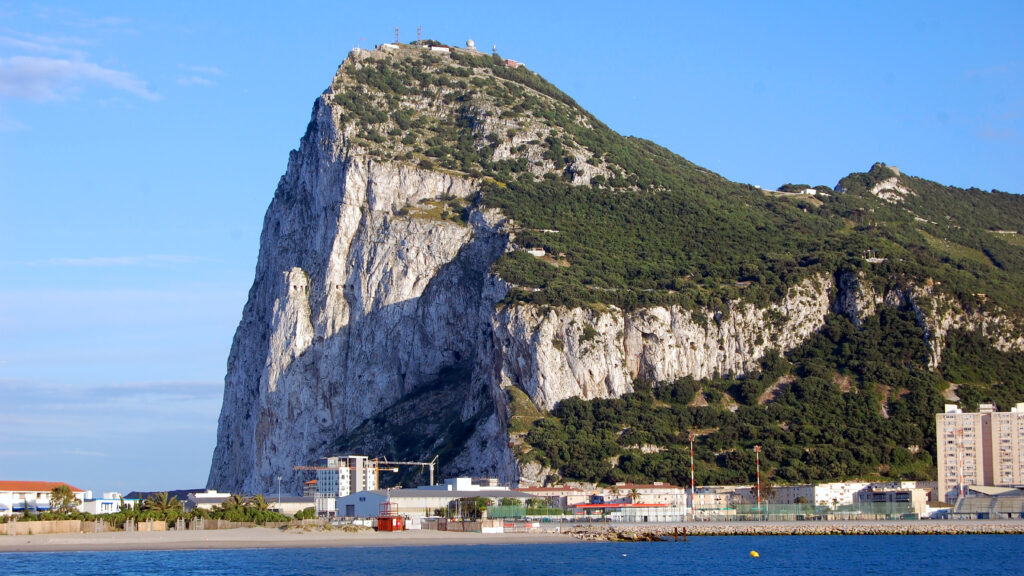
For decades, the Gibraltar border has acted as both a connection and a barrier.
Every morning thousands of workers crossed from Spain into Gibraltar.
Every evening they crossed back again.
The relationship created prosperity, employment and investment, but it also created friction.
Queues.
Delays.
Uncertainty.
Brexit threatened to make those problems even worse.
Instead, seven years after the United Kingdom left the European Union, the region is now preparing for what may be the biggest transformation in cross-border movement since Spain joined the European Community in 1986.
Under the new Gibraltar-EU agreement, physical border controls are set to disappear, with checks moving to Gibraltar’s airport and port facilities instead. The agreement effectively removes one of the last major physical barriers in continental Europe and is expected to take effect in mid-July 2026. ([El País][1])
Politicians are debating the economic implications.
Businesses are analysing the commercial opportunities.
Investors are looking at something else entirely.
Property.
Because while the treaty may be a diplomatic story today, it is increasingly becoming a real estate story tomorrow.
Why Gibraltar Matters So Much to Property Markets
Few places in Europe create the economic imbalance found between Gibraltar and its neighbouring Spanish municipalities.
The Rock has one of Europe’s most prosperous economies.
Its financial services sector, online gaming industry, insurance businesses and maritime operations generate substantial wealth relative to its size. Gibraltar also suffers from one major limitation.
Land.
There is very little of it.
The territory covers just 6.8 square kilometres.
Housing supply is permanently constrained.
As a result, property prices remain among the highest in southern Europe. ([Buy Property Gibraltar][2])
This has created a situation where thousands of professionals working in Gibraltar increasingly choose to live in Spain.
Historically, commuting delays acted as a deterrent.
That deterrent may now be disappearing.
La Línea: The First Beneficiary
No municipality is more exposed to Gibraltar’s economic success than La Línea de la Concepción.
Located directly adjacent to the border, La Línea has historically been viewed as Gibraltar’s neighbour rather than a destination in its own right.
That perception is beginning to change.
Recent reports indicate that property prices in La Línea have accelerated sharply as optimism surrounding the treaty grows. Some reports suggest values have risen substantially over recent months as buyers anticipate easier cross-border movement. ([Olive Press News Spain][3])
The logic is straightforward.
If commuting becomes easier:
- More Gibraltar workers can live in Spain.
- More businesses may consider regional expansion.
- More international professionals may relocate.
- Rental demand could increase.
All of these factors support housing demand.
The Price Gap Is Extraordinary
Perhaps the most compelling investment argument is the enormous pricing differential.
| Market | Approximate Position |
|---|---|
| Gibraltar | Premium European market |
| Sotogrande | Luxury market |
| Marbella | Prime international market |
| Estepona | Upper-mid market |
| Manilva | Growth market |
| La Línea | Value market |
The difference between Gibraltar and La Línea remains dramatic.
Reports continue to show Spanish-side property values significantly below those found on the Rock itself. ([Olive Press News Spain][3])
For many professionals, the financial equation is increasingly obvious.
Live in Spain.
Work in Gibraltar.
Enjoy a larger property and lower housing costs.
Why Investors Are Suddenly Paying Attention
Historically, many international investors overlooked La Línea.
Today, several trends are changing that.
Treaty Certainty
The new agreement provides a clearer framework for future cross-border movement. ([El País][1])
Housing Demand
Workers employed in Gibraltar continue seeking housing alternatives.
Rental Potential
Rental demand linked to Gibraltar employment remains one of the strongest fundamentals in the region.
Infrastructure Improvements
Public investment and regeneration projects continue improving the town’s attractiveness.
Together, these factors are creating a market that increasingly resembles an early-stage growth story.
The Manilva Connection
The story does not end at La Línea.
Increasingly, investors are looking further east toward Manilva.
This is where the article becomes particularly relevant for Costa del Sol professionals.
Many buyers priced out of Marbella have already moved into Estepona.
Many buyers priced out of Estepona are now looking at Manilva.
At the same time, Gibraltar-related demand is moving westward.
The result is a convergence of demand flows.
Manilva sits directly between two powerful economic forces:
- The Costa del Sol growth corridor.
- Gibraltar’s expanding economic influence.
Few municipalities enjoy such a strategic position.
Why Manilva Could Be the Biggest Long-Term Winner
For years Manilva remained one of the Costa del Sol’s most overlooked municipalities.
That is changing rapidly.
The area offers:
- Marina lifestyle
- Beaches
- Golf
- New developments
- Relative affordability
- Proximity to Gibraltar
- Access to Marbella
Investors increasingly view Manilva as offering characteristics that Estepona offered fifteen years ago.
The municipality still possesses development opportunities that are difficult to find elsewhere.
Land remains available.
Pricing remains comparatively accessible.
Growth potential remains significant.
Punta Chullera: The Market Few Are Talking About
Within Manilva, Punta Chullera deserves particular attention.
Located between La Duquesa and Sotogrande, the area combines:
- Sea views
- Low density
- Strategic positioning
- Limited supply
Many local professionals increasingly believe Punta Chullera could become one of the strongest-performing micro-markets on the western Costa del Sol during the next decade.
Unlike Marbella, it remains relatively undiscovered.
That may not last.
Sotogrande’s Influence Continues Growing
Another important factor is Sotogrande.
As prices continue rising within Sotogrande, demand naturally spills into neighbouring municipalities.
This process has already begun.
Many buyers who once focused exclusively on Sotogrande now consider:
- Punta Chullera
- Manilva
- Alcaidesa
- La Línea
The result is a widening area of influence extending across Campo de Gibraltar and the western Costa del Sol.
Risks Investors Should Consider
No market is without risk.
Several important uncertainties remain.
Treaty Implementation
Although the agreement is historic, implementation details remain important. Local leaders continue requesting assurances regarding infrastructure, services and economic impacts. ([Murcia Today][4])
Affordability Concerns
Local officials have already expressed concerns about rising housing costs and affordability pressures. ([El País][1])
Infrastructure Requirements
Population growth requires investment in roads, services and public facilities.
Speculative Activity
Investors should remain cautious about assuming immediate gains purely from treaty announcements.
Long-term fundamentals matter more than short-term headlines.
A New Western Growth Corridor Is Emerging
The most important takeaway may be geographical.
For years, the Costa del Sol growth story effectively ended in Estepona.
That is no longer true.
Increasingly, the investment corridor stretches across:
- Marbella
- Estepona
- Manilva
- Sotogrande
- La Línea
- Gibraltar
The region is becoming more integrated economically and socially.
Property markets are beginning to reflect that reality.
NLS Conclusion
The Gibraltar-EU agreement may ultimately become one of the most important property stories in southern Spain this decade.
Most headlines have focused on politics, borders and diplomacy.
Investors are focused on something else.
Housing.
For decades Gibraltar’s economic success has been constrained by physical geography and border friction.
The new agreement reduces one of those constraints.
As mobility improves, the impact is likely to be felt first in La Línea, then across Campo de Gibraltar, and increasingly throughout the western Costa del Sol.
For NLS members, the most important insight is that this is no longer simply a Gibraltar story.
It is becoming a regional real estate story.
La Línea offers one of the lowest entry points on Spain’s southern coast.
Manilva offers one of the strongest combinations of affordability and growth potential.
Sotogrande continues to exert upward pressure on surrounding markets.
And the entire western corridor is becoming increasingly interconnected.
The Costa del Sol’s next great growth story may not emerge from Marbella.
It may emerge from the stretch of coastline between Estepona and Gibraltar.
Those who recognise that shift early could be among the biggest beneficiaries of the next phase of southern Spain’s property market evolution.