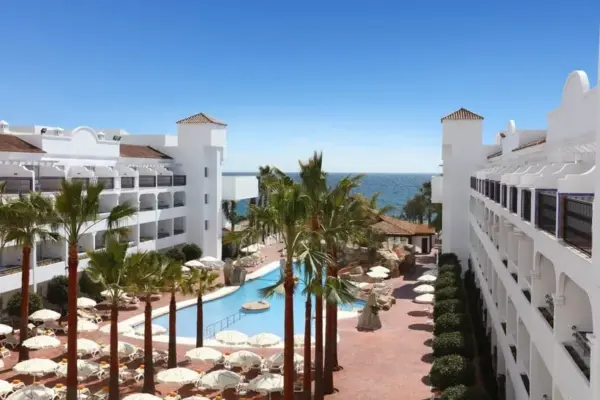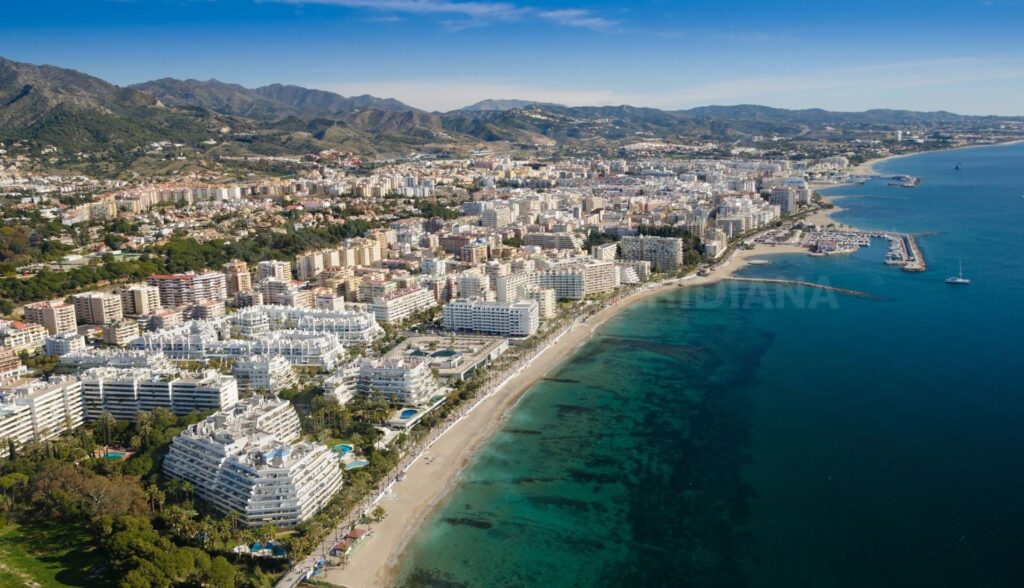
The Costa del Sol has once again demonstrated why it remains one of Europe’s most resilient tourism destinations. As the height of the summer season unfolds, hotel occupancy across Málaga province is hovering close to 90%, reinforcing the region’s enduring appeal to both holidaymakers and international property buyers.
According to the latest figures from the Association of Hotel Entrepreneurs of the Costa del Sol (AEHCOS), hotels achieved an average occupancy of 89.5% during July, exceeding initial expectations. Forecasts for August suggest occupancy will remain exceptionally strong at around 88.9%, with industry leaders expecting last-minute bookings to push figures even higher. International visitors continue to dominate, accounting for around 68% of guests, while domestic tourism also remains an important contributor to the summer season.
For most people, these statistics represent another successful tourist season. For property professionals, however, they tell a much bigger story.
Tourism Is the First Step Towards Property Ownership
The relationship between tourism and property has always been stronger on the Costa del Sol than in many competing Mediterranean destinations.
Unlike city-break locations where visitors often stay for just a few days, many holidaymakers returning to southern Spain develop a long-term emotional connection with the region. Families revisit the same beaches, restaurants and golf courses year after year. Over time, hotel stays become apartment rentals, apartment rentals become second homes, and second homes often become permanent residences.
Estate agents across Marbella, Estepona, Mijas, Fuengirola and Benalmádena regularly report that many international buyers first discovered the Costa del Sol during a family holiday years earlier.
That journey from visitor to homeowner has become one of the defining characteristics of the region’s property market.
Why the Costa del Sol Continues to Stand Out
Competition among Mediterranean destinations has never been greater.
Portugal’s Algarve, the south of France, Greece, Croatia and even emerging destinations in Albania all compete for the same international visitor.
Yet the Costa del Sol continues to maintain remarkable resilience.
Several factors explain this.
The region offers one of Europe’s mildest year-round climates, excellent healthcare, international schools, a well-developed motorway network, world-class golf courses and one of Spain’s busiest international airports.
For buyers from northern Europe, the Costa del Sol provides not simply sunshine but a practical location from which to live, work remotely or retire comfortably.
Tourism figures therefore reflect much more than holiday demand—they measure the attractiveness of an entire lifestyle.
Different Resorts, Different Buyer Profiles
The latest occupancy data also highlights the diversity of the Costa del Sol itself.
Torremolinos recorded almost 95% occupancy, followed closely by Mijas and Benalmádena, while Marbella maintained occupancy approaching 89%, despite commanding significantly higher average room rates.
Each municipality attracts a different property buyer.
Torremolinos continues to appeal to buyers seeking walkable beachfront living and excellent transport links.
Benalmádena combines marina living with established residential communities popular among British, Scandinavian and Belgian purchasers.
Mijas offers a broad range of apartments, villas and golf developments attractive to both investors and families relocating permanently.
Marbella remains one of Europe’s premier luxury destinations, attracting high-net-worth individuals looking for privacy, international schools, exclusive communities and premium amenities.
Understanding these distinctions is increasingly important as buyers become more selective.
Tourism Supports More Than Holiday Rentals
The popularity of holiday rentals often dominates discussions surrounding tourism and property.
However, the broader economic impact is considerably greater.
Hotels generate employment for thousands of local residents. Restaurants, retail businesses, transport operators, maintenance companies and professional services all benefit from visitor spending.
This creates employment opportunities that encourage permanent residency rather than purely seasonal occupation.
As communities become stronger economically, demand for year-round housing also increases.
Developments designed solely for summer tourism may therefore become less attractive than mixed communities capable of supporting permanent residents throughout the year.
From Lifestyle Destination to Relocation Hub
The pandemic fundamentally altered buyer priorities.
Remote working demonstrated that many professionals no longer needed to remain close to their employers.
The Costa del Sol quickly emerged as one of Europe’s leading relocation destinations, offering modern infrastructure combined with exceptional quality of life.
Many recent buyers are no longer purchasing holiday homes.
Instead, they are relocating permanently, enrolling children in international schools, establishing businesses and integrating into local communities.
Tourism remains the gateway, but permanent relocation has become one of the market’s strongest growth drivers.
Challenges Remain
Strong occupancy figures should not be interpreted as evidence that every aspect of the property market is without challenges.
Housing affordability continues to concern local residents.
Water resources remain under pressure during prolonged periods of drought.
Infrastructure investment, including transport improvements and public services, must continue if the region is to accommodate sustained growth.
Climate resilience is also becoming increasingly important. Buyers now ask more detailed questions about energy efficiency, cooling systems, water consumption and insurance than they did even five years ago.
These issues will shape the next phase of the Costa del Sol’s development.
What This Means for Buyers
For international buyers, continued tourism demand reinforces confidence in the long-term attractiveness of the Costa del Sol.
Well-located properties close to beaches, transport links and established services are likely to remain highly desirable.
However, buyers should resist the temptation to purchase purely because tourism numbers appear strong.
Legal due diligence, realistic pricing, community regulations and long-term running costs remain far more important than short-term occupancy figures.
A successful purchase should meet personal lifestyle objectives as well as investment considerations.
What This Means for Sellers
Sellers can take confidence from the region’s continued international popularity.
Demand remains broad, particularly for properties presented professionally and priced realistically.
However, buyers are increasingly informed.
Overpricing based solely on positive tourism headlines may result in longer marketing periods rather than stronger offers.
Presentation, transparency and accurate valuation remain the foundations of a successful sale.
NLS Conclusion
Hotel occupancy approaching 90% is about far more than full beaches and busy restaurants.
It reflects continuing international confidence in one of Europe’s most successful lifestyle destinations.
For the property market, tourism is not simply an economic statistic—it is often the first chapter in a buyer’s journey towards owning a home in southern Spain.
As more visitors discover the Costa del Sol’s combination of climate, connectivity and quality of life, many will inevitably begin asking the same question that has shaped this market for decades:
“What if we owned a place here instead of booking another hotel?”
For estate agents, developers and investors, that question continues to underpin one of Europe’s most dynamic residential property markets.
Sources: AEHCOS occupancy data reported by SUR in English and Cadena SER, published 31 July 2026.