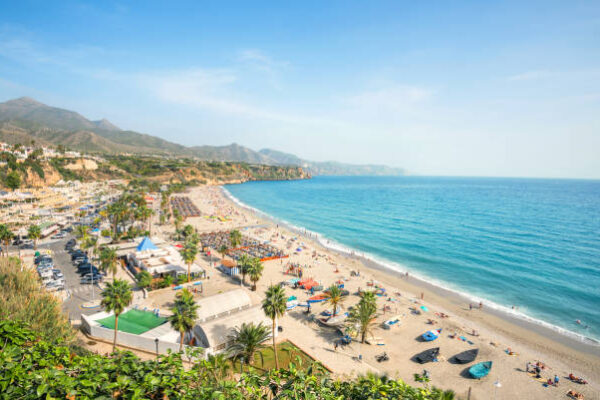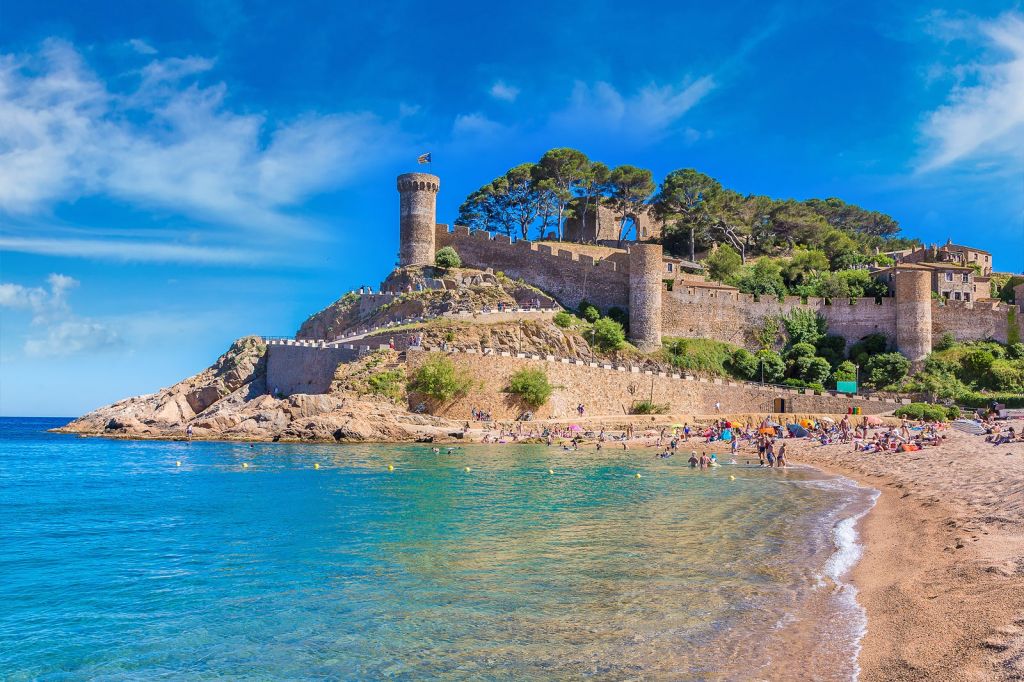
One Country. Three Coasts. Three Very Different Property Markets.
Costa Blanca.
Costa del Sol.
Mallorca.
They are three of the best-known destinations for international property buyers in Spain.
All offer sunshine, Mediterranean lifestyles, international airports and established overseas communities.
But beneath those similarities, something interesting is happening.
They are becoming three very different property markets.
The latest Q2 2026 figures reveal striking differences in foreign demand, pricing and market positioning.
| Market | Foreign Buyers | Average Price |
|---|---|---|
| Costa Blanca / Alicante | 46.43% | €2,267/m² |
| Costa del Sol / Málaga | 37.01% | €3,347/m² |
| Mallorca / Balearics | 32.27% | €4,311/m² |
| Spain Overall | 15.98% | €2,487/m² |
Three international markets.
But three increasingly different propositions.
Costa Blanca is becoming Spain’s international volume and value market.
Costa del Sol is becoming its international premium market.
Mallorca is increasingly its scarcity and ultra-prime market.
Understanding those differences is becoming increasingly important for buyers, sellers and agents.
Costa Blanca: International Volume Meets Relative Value
Start with the most extraordinary number of all.
46.43%
That is the proportion of residential property purchases in Alicante province made by foreign buyers during Q2 2026.
Almost one in every two homes sold.
It is the highest proportion of foreign property purchases of any Spanish province.
Alicante recorded 12,298 residential transactions during the quarter, confirming that this is not simply a small market producing an unusual percentage.
It combines enormous international demand with substantial transaction volume.
And then there is price.
The average property price across Alicante province stood at approximately:
€2,267/m²
That remains below Spain’s national average of €2,487/m².
So Alicante has something unusual: international demand vastly above the national average, yet average pricing below it.
That combination helps explain the Costa Blanca’s extraordinary appeal.
The Costa Blanca Proposition
For many international buyers, Costa Blanca offers a powerful combination:
Mediterranean lifestyle + established international communities + relative affordability.
A buyer from Britain, the Netherlands, Germany, Belgium or Scandinavia can compare property prices at home with those on the Costa Blanca and still find significant perceived value.
But averages can also be misleading.
Costa Blanca is not one homogeneous property market.
Prime northern Costa Blanca locations are operating at considerably higher levels.
Recent completed-sale data puts prices around:
Benissa — €4,835/m²
Teulada — €4,750/m²
Jávea — €3,760/m²
Altea — €3,155/m²
Calpe — €2,945/m²
This means the Costa Blanca can effectively serve two markets simultaneously: a relatively accessible international mass market and a rapidly developing premium market in its most desirable locations.
Costa del Sol: The Premium International Market
Now travel south to Málaga.
The numbers change considerably.
Foreign buyers represented:
37.01%
of residential purchases in Málaga province during Q2.
That means more than one in every three homes sold involved an international buyer.
But the biggest difference between Costa Blanca and Costa del Sol is price.
Málaga’s average stood at approximately:
€3,347/m²
That is roughly 48% higher than Alicante’s €2,267/m².
And once we enter markets such as Marbella and Benahavís, provincial averages become increasingly irrelevant.
The Costa del Sol is moving firmly into premium territory.
Marbella Changes the Equation
Marbella is critical to understanding the difference.
The Costa Blanca contains very expensive properties.
Mallorca contains extraordinary trophy properties.
But Marbella has developed something particularly powerful:
A globally recognised luxury-property brand combined with a substantial wider residential market.
Marbella is no longer competing only against other Spanish destinations.
For high-net-worth buyers, the comparison may involve Dubai, Miami, the Algarve, the South of France, Ibiza, Mallorca, Monaco — and increasingly, Marbella.
Benahavís pushes this positioning even further, with completed-sale data putting the municipality above €5,000/m².
The Costa del Sol therefore occupies an unusual position.
It has international volume, but it also has an increasingly sophisticated luxury ecosystem.
That includes international schools, golf, marinas, restaurants, private healthcare, beach clubs and a growing year-round international population.
Costa del Sol is not simply selling property. Increasingly, it is selling an international lifestyle infrastructure.
Mallorca: Where Scarcity Commands a Premium
Then we arrive in Mallorca.
Here the numbers change again.
Foreign buyers accounted for:
32.27%
of Balearic property transactions in Q2.
That is slightly below Málaga and considerably below Alicante.
But look at the average price:
€4,311/m²
That is approximately 29% above Málaga and around 90% above Alicante.
Mallorca therefore has the lowest foreign-buyer percentage of the three markets — although still more than double the Spanish average — but by far the highest average price.
Why?
One word explains much of it:
SCARCITY.
Mallorca is an island.
Land cannot expand.
Prime coastline cannot be manufactured.
Planning restrictions constrain development.
And the supply of exceptional properties in locations such as Andratx, Deià, Son Vida and southwest Mallorca is inherently limited.
When global wealth competes for finite supply, pricing behaves differently.
Mallorca therefore increasingly resembles a scarcity market.
€2,267 vs €3,347 vs €4,311
Put the three numbers beside each other:
COSTA BLANCA — €2,267/m²
COSTA DEL SOL — €3,347/m²
MALLORCA / BALEARICS — €4,311/m²
The progression is remarkable.
A theoretical 150m² property priced precisely at each regional average would therefore equate to approximately:
Costa Blanca — €340,000
Costa del Sol — €502,000
Balearics — €647,000
Of course, real properties do not work quite that neatly. Location, condition, views, plot, amenities and property type matter enormously.
But the calculation demonstrates just how far these markets have separated.
Now Reverse the Comparison
Price tells one story.
Foreign demand tells another.
COSTA BLANCA — 46.43%
COSTA DEL SOL — 37.01%
BALEARICS — 32.27%
And Spain overall?
15.98%
That produces an interesting inverse relationship.
Of these three markets, the least expensive has the highest foreign-buyer penetration.
And the most expensive has the lowest foreign-buyer penetration.
Not because international buyers are avoiding Mallorca.
Far from it.
Instead, each market is attracting international capital in a different way.
Three Different Buyers
Imagine three hypothetical international buyers.
Buyer One: Costa Blanca
Budget: €400,000
Priorities: sunshine, beaches, good airport connections, an international community and a property offering strong value relative to northern Europe.
This buyer might look at Alicante, Orihuela Costa, Torrevieja, Calpe or surrounding markets.
Buyer Two: Costa del Sol
Budget: €1.5 million
Priorities: year-round lifestyle, international schools, golf, restaurants, marinas, high-quality property and potential relocation rather than simply holidays.
This buyer may look at Marbella, Estepona, Benahavís, Mijas or surrounding areas.
Buyer Three: Mallorca
Budget: €5 million
Priorities: privacy, architecture, sea views, scarcity, prestige and a long-term European trophy asset.
This buyer may focus on Andratx, Son Vida, Deià or southwest Mallorca.
All three buyers are buying property in Spain.
But economically, they are participating in three very different markets.
The €1 Million Question
This becomes particularly interesting if we ask:
What does €1 million buy?
On the Costa Blanca, €1 million can place a buyer firmly into premium territory in many locations.
On the Costa del Sol, €1 million increasingly represents the upper-middle or entry-premium market in the most desirable locations.
In Mallorca’s most exclusive areas, €1 million may simply represent the starting point.
Same country.
Same currency.
Same Mediterranean lifestyle proposition.
Very different purchasing power.
Spain’s Coastal Market Is Fragmenting
This is perhaps the biggest takeaway from the latest data.
There is increasingly no such thing as a single “Spanish coastal property market.”
Instead, Spain contains multiple international residential ecosystems.
And they are diverging.
The Costa Blanca competes heavily on lifestyle and relative value.
The Costa del Sol competes on lifestyle infrastructure and premium positioning.
Mallorca competes on exclusivity and scarcity.
That distinction is likely to become more important as prices continue rising.
A More Selective Market
There is another important piece of Q2 data.
Spain recorded 167,934 home sales during the quarter.
That was down:
5.7%
from Q1.
Yet average prices reached approximately:
€2,487/m²
And foreign demand reached a record:
15.98%
That combination is important.
Transaction volumes are moderating. Prices remain high. International demand remains extremely strong.
This suggests Spain may be moving from a broad property boom into something more selective.
Buyers have not disappeared.
They are becoming more discriminating about what they buy and where they buy it.
And that could increasingly reward the strongest locations.
What This Means for Property Sellers
For sellers, these differences matter enormously.
A Costa Blanca property should not necessarily be marketed the same way as a Marbella villa.
And a €7 million Mallorca property should not be marketed like either.
The target buyers are different.
The value proposition is different.
The competing destinations are different.
The marketing strategy should therefore be different too.
But they share one fundamental characteristic:
Their potential buyer may not currently be in Spain.
What This Means for Estate Agents
For agents, the implications are even bigger.
When 46.43% of Alicante purchases, 37.01% of Málaga purchases and 32.27% of Balearic purchases involve foreign buyers, international exposure is not an optional marketing extra.
It is becoming part of the basic infrastructure of these markets.
Agents increasingly need to think beyond their own postcode.
Listings need accurate data.
Properties need professional presentation.
Buyers need access to inventory.
And cooperation between agencies becomes increasingly valuable.
Because the agent representing the right buyer and the agent representing the right property may be working for completely different companies — or even operating in different countries.
The NLS Conclusion
Costa Blanca, Costa del Sol and Mallorca are often placed under the same convenient label:
Spanish coastal property.
The Q2 2026 numbers show why that description is becoming inadequate.
Costa Blanca
46.43% foreign buyers
€2,267/m²
International volume and relative value.
Costa del Sol
37.01% foreign buyers
€3,347/m²
International demand and premium lifestyle.
Mallorca / Balearics
32.27% foreign buyers
€4,311/m²
International wealth and scarcity.
Three markets.
Three price points.
Three increasingly different buyer propositions.
Yet all three share the same fundamental transformation.
Their property markets are no longer defined solely by the people who live there.
They are being shaped by buyers across Europe — and increasingly across the world.