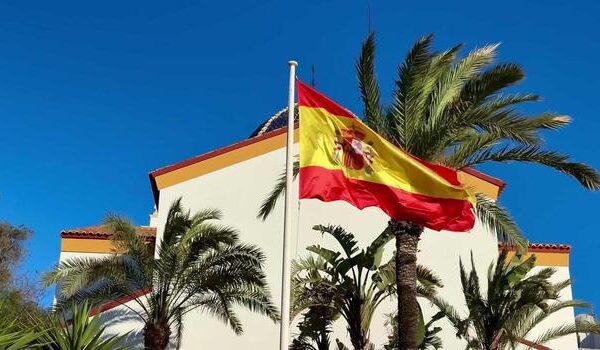
Spain has officially emerged as the number one destination for remote workers in 2026, reinforcing a transformation that has been building quietly for years.
This is not a lifestyle fad.
It is structural repositioning.
From digital nomads to long-term remote professionals, Spain now sits at the intersection of global mobility, infrastructure readiness, climate advantage, and EU stability – a combination few countries can match.
Why Spain Leads the Global Remote Work Rankings
Recent international mobility and relocation studies consistently place Spain at the top of remote worker preference lists. The drivers are not superficial.
They are systemic.
Spain offers:
- High-speed digital infrastructure across major cities and coastal hubs
- A dedicated Digital Nomad Visa framework
- EU residency benefits and mobility rights
- Competitive cost of living relative to Northern Europe and the U.S.
- Established international communities
- Strong healthcare and public infrastructure
Remote work no longer depends on corporate headquarters.
It depends on lifestyle ecosystems.
Spain delivers the ecosystem.
The Digital Nomad Visa Effect
Spain’s introduction of a long-term Digital Nomad Visa materially changed its competitive positioning.
Unlike short-stay schemes, Spain’s framework allows eligible remote professionals to:
- Reside legally while working for foreign employers
- Access EU mobility
- Integrate into local systems
- Transition from short-term stays to structured residency
This removes uncertainty – and uncertainty is friction.
When friction decreases, capital flows increase.
Where Remote Workers Are Concentrating
Spain’s remote workforce is not evenly distributed.
It clusters in high-functioning nodes:
Barcelona
Urban density, international connectivity, tech ecosystem depth.
Madrid
Economic stability, corporate infrastructure, global positioning.
Valencia
Balanced pricing, strong lifestyle quality, growing international scene.
Málaga & Costa del Sol
Climate advantage, expanding tech hub presence, premium lifestyle alignment.
Balearic Islands
Selective premium remote segment combining lifestyle and prestige.
These are not random destinations.
They are benchmark ecosystems.
Remote Work as an Economic Layer
Remote workers do more than rent apartments.
They:
- Spend locally year-round
- Increase mid-market rental demand
- Transition into ownership
- Create service-sector absorption
- Support co-working and hospitality infrastructure
This introduces a new demand layer into Spain’s housing market — one that sits between tourism and permanent domestic ownership.
Remote work demand is sticky.
It often evolves from short stay → medium-term rental → property purchase.
Why Spain Outperforms Competitors
When compared to Portugal, Italy, Greece, or Eastern European hubs, Spain offers a rare combination:
- Large, diversified cities
- Global airport connectivity
- Established expat networks
- Cultural integration ease
- Legal stability within the EU framework
Portugal remains competitive in affordability.
Greece offers tax incentives.
But Spain delivers scale, liquidity, and depth.
Scale creates resilience.
Real Estate Implications
The rise of Spain as the #1 remote work destination directly impacts:
- Urban rental pricing
- New-build absorption
- Mid-market apartment liquidity
- Premium lifestyle corridor pricing
Remote professionals often prioritise:
- Walkability
- Reliable internet infrastructure
- Governance transparency
- Legal clarity
- Clean documentation
They are digitally native and risk-sensitive.
When listings appear duplicated or inconsistently represented, trust erodes quickly.
Professionalism becomes competitive advantage.
The Broader Strategic Signal
Spain’s leadership in remote worker preference is not about weather alone.
It signals:
- Institutional credibility
- International openness
- Infrastructure maturity
- Long-term residency viability
Remote work is not temporary migration.
It is distributed global productivity.
Spain has positioned itself as a primary host.
The NLS Conclusion: Mobility Markets Require Structural Clarity
As Spain attracts governance-sensitive, digitally native remote professionals, expectations rise.
These buyers and renters expect:
- Verified property identity
- Transparent representation
- Accurate listing data
- Reduced duplication
- Structured transaction flow
In fragmented listing environments, confidence slows.
In structured environments, commitment accelerates.
Spain’s rise as the #1 remote worker destination strengthens its global real estate appeal.
But appeal alone is not enough.
Structure converts mobility into ownership.
And ownership reshapes markets.