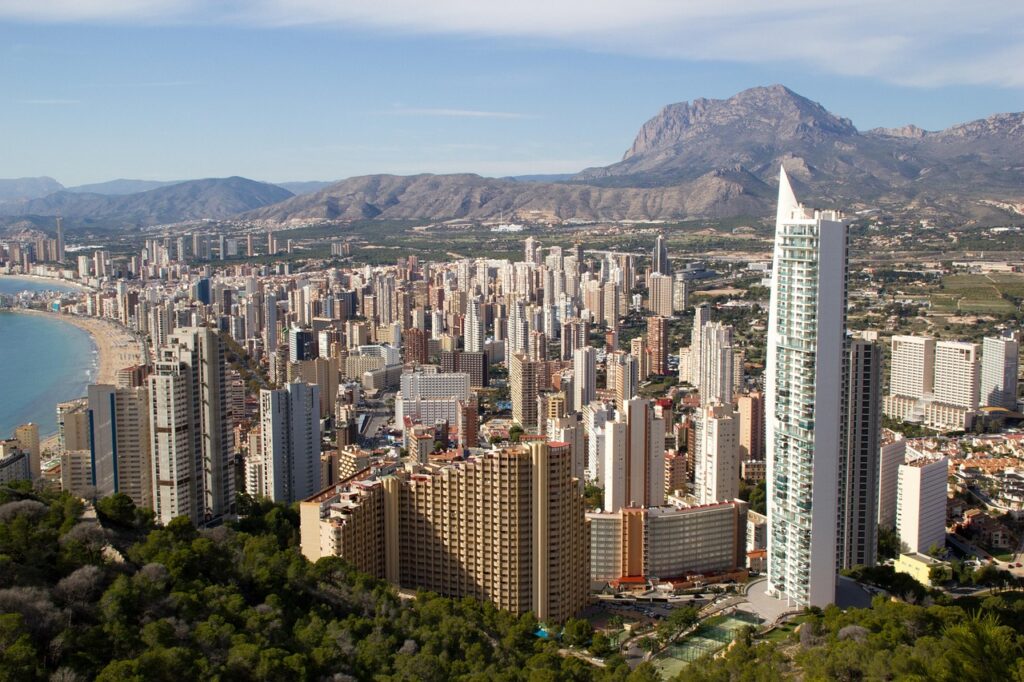
Spain is expected to remain one of Europe’s strongest residential property markets over the next several years.
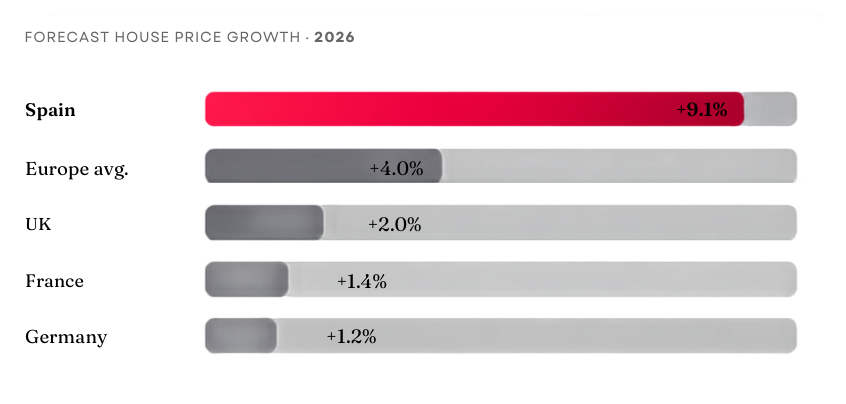
S&P Global Ratings forecasts that Spanish house prices could rise by approximately 9.1% during 2026. Portugal is expected to record slightly higher growth this year, but Spain is forecast to lead the European market in both 2027 and 2028.
The forecast suggests Spain’s housing boom is not expected to disappear after one exceptional year. Instead, the ratings agency believes the combination of economic growth, limited housing supply and resilient demand could continue supporting prices.
Why Spain is outperforming Europe
Spain entered the present cycle with a substantial shortage of housing in areas where people most want to live.
Employment opportunities, tourism, infrastructure and population growth are concentrated in Madrid, Barcelona, Valencia, Málaga, Alicante, the Balearic Islands and other successful metropolitan or coastal regions.
The supply response has been slow. Obtaining planning approval can take years, while shortages of skilled construction workers and higher material costs create additional barriers.
Spain also continues to attract international buyers. Mediterranean lifestyle destinations offer a combination of climate, infrastructure, healthcare, security and connectivity that remains difficult to replicate elsewhere in Europe.
A national market with very different local realities
The S&P forecast is a national projection. It does not mean every province will grow at the same pace.
Some inland municipalities have abundant supply and limited population growth. In these locations, properties can remain available at extremely low prices.
By contrast, coastal markets with international airports, established expatriate communities and limited development land can experience much greater pressure.
This distinction is especially important for anyone describing Spain as a single property market. In practice, Spain contains hundreds of local markets operating at different speeds.
Costa del Sol outlook
The Costa del Sol is well positioned to benefit from the trends identified by S&P.
Málaga has developed a broader economic base through technology, professional services, tourism and international investment. Meanwhile, Marbella and its surrounding municipalities continue to attract high-net-worth buyers and families relocating permanently.
The strongest long-term demand is likely to remain focused on properties that satisfy year-round living requirements: reliable internet, energy efficiency, security, parking, access to schools and proximity to services.
Developments relying entirely on speculative holiday-home demand may be more sensitive to economic or regulatory changes.
Costa Blanca outlook
Costa Blanca’s primary advantage remains value.
Although prices have increased substantially, purchasers can generally access larger properties or better coastal proximity than they could obtain for the same budget in Mallorca or prime Marbella.
Alicante-Elche Airport, established foreign communities and a broad range of property types support demand.
The risk is that rapid price increases eventually weaken the affordability that made the region attractive. Developers and local authorities must therefore deliver more housing for residents as well as international purchasers.
Mallorca outlook
Mallorca’s market is shaped by scarcity rather than volume.
The island cannot continually expand its developable land. Environmental protections and infrastructure limits make unrestricted construction neither possible nor desirable.
This may support the values of existing properties, especially in prime areas, but it also intensifies the political debate surrounding affordability, tourism and foreign ownership.
Investors should therefore assess regulatory exposure as carefully as they assess the property itself.
What could disrupt the forecast?
Forecasts are not guarantees.
Higher European interest rates, energy shocks, weaker tourism, geopolitical instability or major tax changes could reduce activity. Affordability constraints could also cause transaction numbers to slow even while asking prices remain elevated.
The most likely outcome is therefore not unlimited price growth. It is a market in which quality properties remain highly sought after while buyers become more selective.
NLS Conclusion
S&P’s forecast provides powerful evidence that Spain’s residential market is being supported by structural forces rather than a temporary surge in optimism.
The central issue is supply. Unless Spain delivers more homes in the places experiencing population and employment growth, competition for existing properties will continue.
For Costa del Sol, Costa Blanca and Mallorca agents, the opportunity comes with a responsibility: distinguish genuine market value from speculative pricing and provide buyers with reliable local evidence.