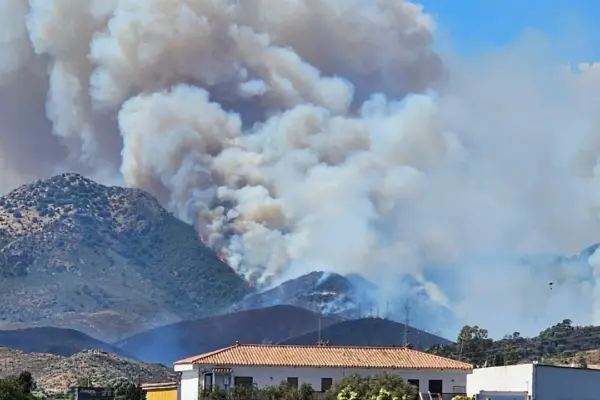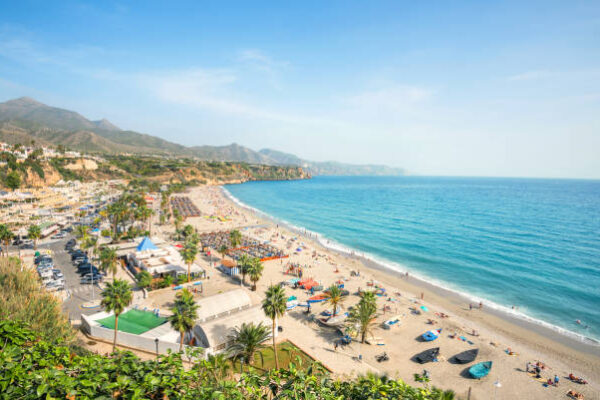
12,000 workers needed on the Costa del Sol. A 50,000-worker deficit reported in Alicante. Around 6,000 more needed in the Balearics. Spain wants to build more homes — but who is going to build them?
For years, Spain’s housing debate has revolved around one overriding problem:
There are not enough homes.
The proposed solutions have become familiar. Release more land. Accelerate planning. Build more affordable housing. Reduce bureaucracy. Encourage development. Increase density.
But another increasingly important constraint is emerging — and it cannot be solved with another planning permission.
Spain needs people to physically build the homes.
On the Costa del Sol, the construction industry has warned that Málaga province may require between 8,000 and 12,000 additional construction professionals to satisfy current and future housing demand.
In Alicante, home to much of the Costa Blanca market, the province’s public works federation FOPA has reported a construction labour deficit of approximately 50,000 workers.
And in the Balearic Islands, industry estimates point towards a need for approximately 6,000 additional construction workers.
These figures come from different regional organisations and use different methodologies, so they should not simply be combined into a single national total.
But viewed together, they reveal something much more significant.
Some of Spain’s most important property markets are confronting the same problem at the same time.
The housing shortage is increasingly becoming a people shortage.
Costa del Sol: Up to 12,000 Additional Professionals Needed
The latest warning comes from the Costa del Sol.
On 20 August 2026, SUR in English reported an estimate from José Andrés Mena, CEO of Estepona-based Jamena Construcciones, that Málaga province’s construction industry needs between:
8,000 and 12,000 new professionals
to meet current and future demand.
And this is not simply a shortage of general labourers.
The occupations reportedly in demand stretch across almost the entire construction process, including master tradespeople, formwork fitters, steel fixers, specialist bricklayers, electricians, plumbers, plasterers, tilers, machine operators, crane operators, site managers and lorry drivers.
That matters enormously for the Costa del Sol property market.
From Málaga and Mijas through Marbella, Benahavís and Estepona, construction has become a critical part of an economy experiencing intense housing demand — particularly within the new-build and premium sectors.
The traditional assumption is that if developers can acquire land, secure planning permission and finance construction, the homes can ultimately be delivered.
The labour shortage challenges that assumption.
A development does not get built because a spreadsheet says it is viable.
Someone still has to lay the bricks.
Install the electrics.
Fit the plumbing.
Operate the machinery.
Manage the site.
And increasingly, those people are becoming a scarce resource.
The Problem Isn’t Simply Unemployment. It’s Skills.
There is an interesting contradiction within the Málaga figures.
Construction unemployment in the province has reportedly fallen by more than 30% over four years, leaving 9,694 people registered as unemployed in the sector in July.
Yet employers are still struggling to find the specific skills required.
That tells us something important.
The issue isn’t simply unemployment.
It is skills.
And Málaga is far from alone.
Costa Blanca: A Reported 50,000-Worker Deficit
If the Costa del Sol estimate is striking, the warning from Alicante is even larger.
In January 2026, the Federación de Obra Pública de Alicante (FOPA) estimated that Alicante province’s construction sector faced a deficit of approximately:
50,000 workers
Again, this should not be treated as directly equivalent to the Costa del Sol estimate.
But the underlying problem is remarkably similar.
Companies are struggling to recruit qualified personnel including foremen, electricians, formwork specialists, steel fixers and other skilled trades.
The consequences are already practical.
Incomplete workforces can cause construction phases to overlap, projects to take longer and contractual deadlines to become increasingly difficult to meet.
For the Costa Blanca property market, the implications are significant.
Alicante is one of Spain’s major residential development centres and benefits from enormous international buyer demand.
But demand alone cannot produce supply.
If development increases faster than the construction workforce, labour itself becomes a bottleneck.
Balearic Islands: Around 6,000 Additional Workers
The same challenge is appearing in another of Spain’s most valuable property markets.
The Balearic construction sector has estimated a requirement for approximately:
6,000 additional workers
against an existing construction workforce reported at roughly 61,000.
Mallorca is particularly interesting because the islands already face significant constraints on housing supply.
Land is inherently limited.
Planning is restrictive.
Construction costs are high.
Environmental considerations are substantial.
Infrastructure capacity matters.
And housing demand remains intense.
Add a shortage of people capable of actually delivering new homes and another constraint enters an already difficult supply equation.
There is also a major paradox.
The people required to build homes may themselves struggle to afford homes in the places where they are needed.
Three Markets. One Structural Problem.
Consider the picture:
COSTA DEL SOL
8,000–12,000 additional construction professionals estimated to be needed.
ALICANTE / COSTA BLANCA
50,000-worker construction deficit reported by FOPA.
BALEARIC ISLANDS
Around 6,000 additional workers estimated to be needed.
They are not one dataset and should not be presented as one.
But their direction is unmistakable.
Three of Spain’s most internationally significant coastal and island property markets are reporting substantial construction labour shortages.
There is also a wider national backdrop.
BBVA Research has reported that unfilled construction vacancies doubled from 2020, while labour availability has become an increasingly important concern for builders.
Construction also represents a much smaller proportion of Spanish employment than during the country’s previous major building cycle.
The industry once accounted for approximately 14% of employment.
Since 2014, that figure has remained around 6–7%.
Spain may therefore be entering another major housebuilding cycle without anything resembling the construction workforce of its previous one.
The Generational Problem
Perhaps the biggest challenge is not today’s shortage.
It is tomorrow’s retirement.
Spain’s construction workforce has aged considerably.
BBVA Research previously calculated that the average age of construction employees increased from:
37.3 years in 2007
to:
45.1 years in 2022
Bricklayers were already approaching an average age of 50.
That matters because every experienced electrician, plumber, carpenter or bricklayer who retires takes years of practical knowledge with them.
If there is nobody behind them learning the trade, the shortage compounds.
The Costa del Sol warning should therefore not simply be viewed as a recruitment problem.
It is a generational replacement problem.
Spain has spent decades encouraging younger generations towards university education and away from traditional trades.
Expanding higher education brought enormous benefits.
But an unintended consequence may now be emerging.
Modern economies need highly educated professionals.
They also need skilled tradespeople capable of physically building those economies.
You cannot construct a villa with an MBA.
You cannot wire an apartment building with a law degree.
And you cannot solve a housing shortage without people who know how to build homes.
Scarcity Has a Price
The economics are already responding.
BBVA Research found that between the end of 2019 and Q1 2025, average compensation per employee in construction increased by almost 46%.
When skilled workers become scarce, their economic value rises.
For workers, that could make construction careers considerably more attractive.
For developers, however, it creates another cost pressure.
Higher labour costs can increase construction costs.
Higher construction costs can make marginal developments unviable.
Fewer viable developments restrict supply.
And constrained supply within markets experiencing strong demand can place additional pressure on property prices.
This does not mean a shortage of builders automatically produces a particular increase in house prices.
Property markets are far more complicated.
But labour availability clearly belongs in Spain’s housing affordability discussion.
Spain Cannot Simply “Build More”
Across Europe, politicians increasingly talk about solving housing affordability through additional construction.
Conceptually, it makes sense.
If demand significantly exceeds supply, increasing supply must form part of the solution.
But “build more homes” is not actually a policy.
It is an outcome.
Achieving it requires:
Land.
Planning permission.
Infrastructure.
Finance.
Materials.
Developers.
Architects.
Engineers.
And workers.
Remove any one of those components and the production line slows.
Spain could approve tens of thousands of additional homes tomorrow.
They would still need people to build them.
Immigration Is Already Part of the Equation
Foreign workers are already becoming increasingly important to Spain’s wider labour market.
BBVA Research reported in June 2026 that foreign employment across the Spanish economy had risen 53% since the end of 2019 and accounted for almost two-thirds of net employment creation since the pandemic.
Construction has historically relied heavily on migrant labour, and immigration could form part of the response to the sector’s ageing workforce.
But it does not remove the need for training.
Spain potentially needs a combination of:
Domestic vocational training. More young people entering skilled trades. Greater participation by women. Better career progression. Higher productivity. Modern construction techniques. And effective integration and training of foreign workers.
This is no longer simply a construction-industry issue.
It is becoming part of Spain’s broader economic and demographic challenge.
The Housing Shortage Could Create a Career Opportunity
There is another side to the story.
A shortage of tens of thousands of skilled workers also represents an enormous employment opportunity.
For years, construction careers have sometimes been treated as inferior to university-based professions.
The economics may force that perception to change.
If demand for electricians, plumbers, carpenters, machine operators, crane operators and specialist trades continues to exceed supply, those skills become increasingly valuable.
Construction can offer something particularly attractive to younger workers:
A skill the economy demonstrably needs.
Technology will change those careers.
Modular construction, prefabrication, robotics, AI-assisted project management and automated machinery can all increase output per worker.
But technology will not eliminate the requirement for skilled people.
AI can help design a building.
Software can optimise it.
Prefabrication can make its construction more efficient.
But somebody still has to turn the plan into a functioning home.
What This Means for Property Buyers
Why should a shortage of electricians or bricklayers matter to someone buying a home in Spain?
Because construction capacity ultimately influences housing supply.
Persistent labour shortages could mean longer development timelines, higher new-build costs and greater competition for completed properties.
Developer quality may also become increasingly important.
Companies with established contractor networks and reliable access to skilled labour could gain a significant advantage over developers struggling to secure tradespeople.
Affordable housing could be particularly vulnerable.
When construction costs increase but permitted sale prices remain restricted, projects can become economically unviable.
That would be precisely the opposite of what Spain needs.
What This Means for Developers
For developers, access to labour could increasingly become a competitive advantage.
Historically, development strategy might have centred around:
Land + Planning + Capital
Increasingly, another component belongs alongside them:
People.
A developer that controls excellent land but cannot secure reliable contractors has a problem.
A developer with strong relationships across contractors, trades and subcontractors has something increasingly valuable.
This could matter particularly in premium markets such as Marbella, Benahavís, Estepona and Mallorca, where the complexity and finish expected from buyers can require highly specialised workers.
NLS Analysis: The Costa del Sol Is a Warning for Spain
The 12,000 figure should be viewed as more than a local construction statistic.
The Costa del Sol has become one of Europe’s most dynamic international residential markets.
Capital is arriving.
Buyers are arriving.
Developers are building.
New projects are being announced.
But physical capacity has limits.
The property industry frequently discusses demand.
Perhaps the next decade will force it to think much more seriously about delivery capacity.
Because those are not the same thing.
You can have demand for 20,000 homes.
You can have investors willing to finance them.
You can have land capable of accommodating them.
But if the industry lacks the human capacity to construct those homes within the required timeframe, theoretical supply means very little.
NLS Conclusion: Spain Doesn’t Just Need More Homes. It Needs the People to Build Them.
The numbers coming from Spain’s coastal construction markets deserve attention.
Up to 12,000 additional professionals on the Costa del Sol.
A reported 50,000-worker construction deficit in Alicante.
Around 6,000 additional workers needed in the Balearic Islands.
Again, these estimates should not simply be added together. They represent different measurements produced by different regional industry organisations.
But perhaps that makes their underlying message even more significant.
Independent construction markets are reaching remarkably similar conclusions.
Spain has a housing supply problem.
It has a planning problem.
It has an affordability problem.
And increasingly:
Spain has a people problem.
Addressing it will require vocational education, apprenticeships, higher productivity, immigration, greater participation from women and younger workers, improved career prospects and probably greater industrialisation of construction.
Because the next chapter of the Spanish property market will not be determined solely inside estate agencies, planning departments, banks or investment committees.
It will also be determined on building sites.
Spain can approve more homes.
Spain can finance more homes.
Spain can sell more homes.
But first, somebody has to build them.
The NLS — Spanish Property Intelligence
Sources: SUR in English / Jamena Construcciones; Federación de Obra Pública de Alicante (FOPA); Balearic construction-industry estimates; BBVA Research. Regional labour estimates use different definitions and methodologies and are therefore presented individually rather than as a combined Spanish total.