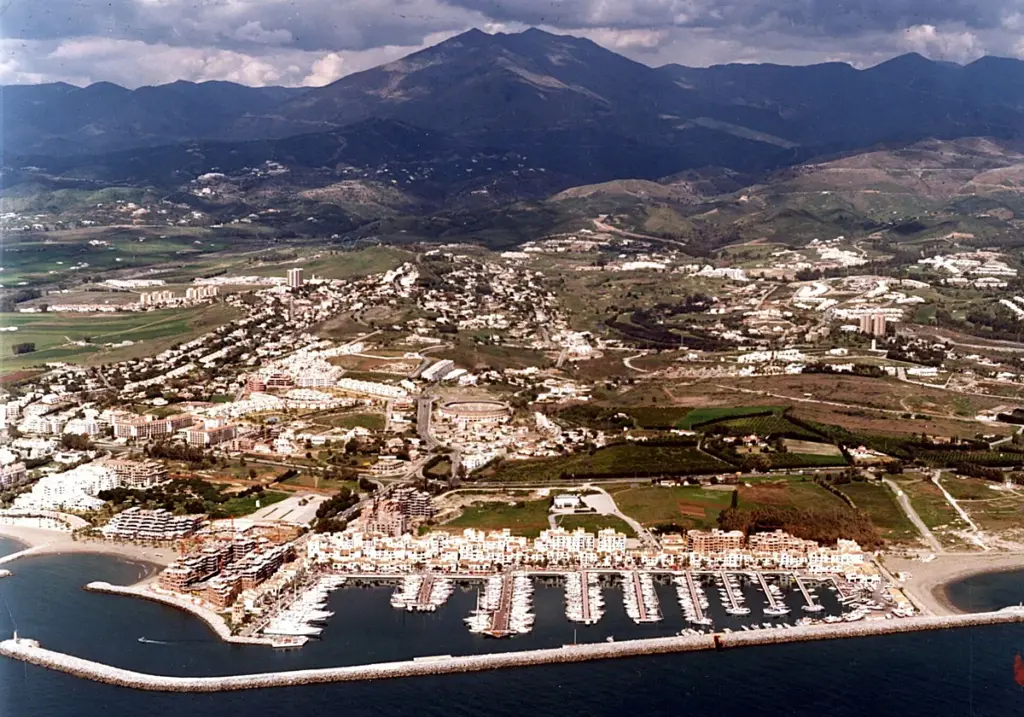
After almost four decades without an up-to-date planning framework, Marbella has a new General Municipal Plan. Here is what was actually approved, what is still to come, and how it affects owners, buyers and investors.
On 18 September 2026, Marbella’s municipal council unanimously approved the city’s new Plan General de Ordenación Municipal (PGOM). It is the first general plan in Andalusia adapted to LISTA, the region’s land and urban planning law, and it replaces the 1986 framework that the city had been forced to fall back on after the Supreme Court annulled the 2010 plan.
For a city that has grown enormously since the 1980s, the vote marks a turning point. But it is important to be clear about what the PGOM does and does not do, because a lot of what is circulating locally runs ahead of what has actually been decided.
Why it matters
For years, Marbella’s development has been governed by rules written for a very different city. The result was a long period of legal uncertainty that affected everyone involved: the town hall, developers, lenders and, above all, homeowners. Properties existed and were lived in, yet their planning status remained unclear, which complicated mortgages, renovation permits and resales.
The new PGOM gives Marbella a modern legal foundation that reflects how the city has really developed, and its unanimous approval suggests a framework built to last beyond any single political term.
The key figures
The plan expands the land classified as urban from roughly 40 million square metres under the 1986 plan to around 53 million, an increase of about 13 million square metres. Of that newly classified land, approximately 3 million square metres remain undeveloped, creating space for new housing, public facilities, green areas and economic activity over the coming decades.
The plan also reserves 20% of residential land for protected (affordable) housing.
According to the town hall, around 18,000 homes were left in an irregular or uncertain planning situation under the old framework. The PGOM creates a path to resolve their status over time, with particular consideration for owners who bought in good faith. This is not, however, an automatic or immediate regularisation.
Infrastructure first
A central principle of the new plan is that growth must be backed by infrastructure. The PGOM provides for water storage tanks, supply and sewage networks and new electrical substations. It treats the city’s streams as natural corridors and includes new roads, better connections between urbanisations, additional cycle lanes and more parking.
It also reserves space for railway infrastructure. Marbella remains the only Spanish city of more than 100,000 inhabitants without a train, and the national government has already deemed the Fuengirola to Marbella section viable. That said, there is currently no chosen route and no confirmed station locations, so a future train should not yet be factored into any property’s value.
What comes next: the POU
The PGOM sets the city model: where Marbella can grow and with what infrastructure. It does not go down to the level of individual plots. That detail will come in a second document, the Plan de Ordenación Urbana (POU), which is still being drafted.
The POU will regulate and classify land in detail, defining building heights, density, permitted uses, the opening of new residential areas, environmental and coastal protection, and the tourism model. In practical terms, it is the document that will shape what Marbella physically looks like over the next 20 to 30 years.
The POU must pass through initial approval and a public consultation period before final approval. Local industry estimates suggest this is unlikely before late 2027 or 2028, and processes of this kind often take longer than expected. In the meantime, buildable area and site coverage in many zones continue to refer to the 1986 plan on a transitional basis. Classifying land as urban is only the first step, and no change should be assumed for any specific plot until the POU is approved.
What it means for you
For owners: If your property has been in a legal grey area, this is a significant step forward. Greater legal clarity tends to support resale value, access to financing and future renovation permits. It is worth checking with a local advisor whether your property falls within the zones the plan addresses.
For buyers: Before committing to land or a new development, confirm exactly where the plot sits under the new classification, and remember that the POU will settle the fine detail. Standard due diligence still applies: verify the building licence and licence of first occupation, make sure the Land Registry and Cadastre records match, and work with an independent lawyer who knows Marbella.
For investors: The biggest change is predictability. Since the 2010 plan was annulled, planning uncertainty has weighed on purchasing, financing and development decisions. A defined city model, with a known roadmap for the detail, makes it easier to estimate project timelines and plan long-term positions, particularly at the upper end of the market.
The bigger picture
The new PGOM will not transform Marbella overnight, and it does not justify assumptions about price rises or changes of use that do not yet exist. What it does deliver is something the city has lacked for a generation: clear rules and a direction of travel. For anyone buying, selling or building in Marbella, that certainty may prove to be its most valuable outcome.
Sources: Marbella Town Hall official statement (18 September 2026); Diario Sur (18 September 2026); El Español (14 January 2026).