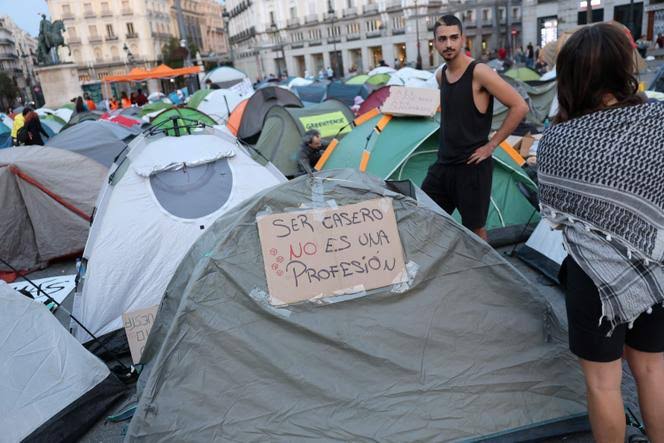
More than 330 protesters have been removed from Madrid’s Puerta del Sol following weeks of demonstrations over rising housing costs, rental affordability and tenant protections.
Spanish police have dismantled a large housing protest camp in central Madrid, bringing an end to more than a month of demonstrations highlighting Spain’s growing housing affordability crisis.
The operation took place overnight on 2–3 November 2026 in Puerta del Sol, where hundreds of protesters had been camping since late September.
According to Madrid authorities, 334 people were removed from the square and two individuals were arrested. The operation involved approximately 400 national and municipal police officers, alongside firefighters and social services.
What Sparked the Housing Protests?
The demonstrations began on 26 September following the eviction of an 87-year-old woman from her long-term home in Madrid.
According to tenant organisations, the woman’s rent had increased significantly after a real estate company acquired the property, ultimately leading to her eviction.
The incident sparked widespread public anger over rising rental prices, housing insecurity and the availability of affordable accommodation.
Tens of thousands of demonstrators subsequently took to the streets across Spain, demanding stronger tenant protections and government action to address the housing shortage.
Police Operation Sparks Dispute
Madrid authorities described the overnight clearance as peaceful, reporting no major incidents during the operation.
However, protest organisers disputed this account, alleging that officers used force and that several demonstrators suffered injuries.
The encampment had developed into a temporary community, with tents, communal facilities, meeting areas and support services for participants.
Following the clearance, municipal cleaning teams began removing the remaining structures and restoring access to the square.
Spain’s Housing Affordability Crisis Continues
The protests reflect mounting pressure on Spain’s residential property market, where rising prices and limited housing availability have become major concerns.
According to Spain’s National Statistics Institute, residential property prices increased by 12.2% year-on-year in the second quarter of 2026.
Second-hand properties recorded an increase of 12.9%, while newly built homes rose by 7.4%.
Rental prices have also continued to climb, with average advertised rents reaching €15.10 per square metre in August 2026, representing an annual increase of 5.8%, according to Idealista.
These increases have placed additional financial pressure on households, particularly in major cities and high-demand coastal destinations.
What Does This Mean for Spain’s Property Market?
The demonstrations highlight the growing importance of housing affordability in discussions surrounding Spain’s real estate sector.
While strong demand continues to support property investment and development, limited housing supply remains a significant challenge.
For developers, investors and real estate professionals, the situation reinforces the importance of increasing residential construction, improving access to housing and balancing market growth with the needs of local communities.
The debate is particularly relevant in high-demand markets such as Madrid, Barcelona, Málaga and the Costa del Sol, where international investment, population growth and housing availability continue to shape market conditions.
Housing Policy Remains in the Spotlight
Although the protest camp has now been dismantled, the wider debate surrounding Spain’s housing crisis remains unresolved.
Calls for stronger tenant protections, increased affordable housing development and measures to address rising rental costs are expected to remain central to national discussions.
For Spain’s property sector, the challenge will be supporting continued investment and development while ensuring that housing supply can respond to growing demand.
Sources: The Straits Times, AFP and Euronews, 3 November 2026.