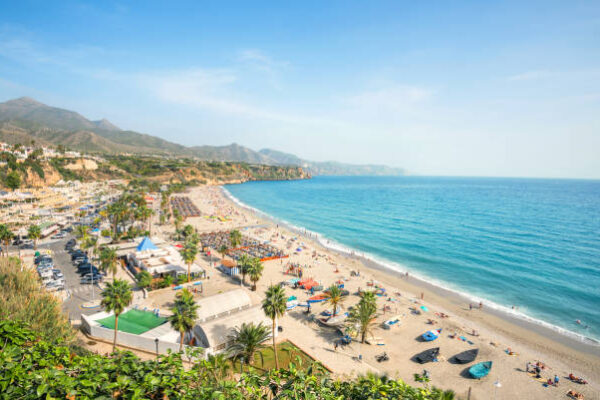
The Costa del Sol – anchored by Málaga and stretching across Marbella, Estepona, and Benahavís—has rapidly evolved into one of Europe’s most dynamic real estate markets.
What was once defined by second homes and seasonal tourism is now transforming into a fully integrated, tourism-driven investment ecosystem.
At the centre of this shift is the rapid expansion of the short-stay and luxury accommodation sector.
According to Cadena SER Málaga (April 27, 2026), Andalucía is now the second most in-demand region in Europe for short stays, with the Costa del Sol leading the premium segment. The region has recorded over 50 million overnight stays, highlighting not only the scale of tourism—but the depth and consistency of demand.
This demand is no longer purely seasonal. It is increasingly year-round and diversified, driven by:
- Remote workers and digital nomads
- High-net-worth lifestyle buyers
- International tourists seeking premium, serviced experiences
- Investors targeting short-term rental yields
The Rise of Branded Residences & Lifestyle Assets
One of the most important structural shifts in the market is the growth of branded residences and operator-backed developments.
Global players such as:
- Booking Holdings
- Hyatt Hotels Corporation
- Wyndham Hotels & Resorts
are no longer just participating in tourism—they are actively reshaping real estate itself.
Their involvement includes:
- Managing short-term rental inventory
- Partnering with developers on branded residential projects
- Standardising guest experience across privately owned units
This has created a new category of product:
The “hybrid asset”
A property that sits between:
- A private residence
- A hotel suite
- A professionally managed investment
Buyers are no longer purchasing only location or design. They are buying into:
- A brand-backed experience
- A managed rental model
- A predictable income framework
From Lifestyle Purchase to Investment Logic
Historically, property purchases on the Costa del Sol were driven by lifestyle:
- Climate
- Beaches
- Golf
- Prestige
Those fundamentals remain—but the buyer mindset has shifted.
Today’s international buyer is increasingly analytical, asking:
- What is the annual occupancy rate?
- Who operates and manages the asset?
- What are the realistic rental yields?
- How does this compare to markets like Dubai, Miami, or Lisbon?
This reflects a broader transformation:
Real estate is being financialised—without losing its lifestyle appeal.
The Costa del Sol is uniquely positioned because it combines:
- Strong and sustained international demand
- Mature tourism infrastructure
- Multi-demographic lifestyle appeal
- Relative value compared to global luxury hubs
Institutionalisation of the Market
Another defining signal is the growing presence of institutional and corporate players.
As global hospitality groups expand into residential real estate, the market is becoming:
- More standardised in product quality
- More transparent in performance metrics
- More accessible through global distribution platforms
For buyers, this means:
- The ability to purchase remotely
- Reliance on professional management
- Direct access to global demand channels
The result:
The Costa del Sol is transitioning from a fragmented, agent-led market into a structured, system-driven ecosystem.
The Underlying Tension: Growth vs. Sustainability
Rapid growth brings complexity.
The same forces driving demand and investment are also creating:
- Pressure on local housing supply
- Rising purchase and rental prices
- Increased regulatory focus on short-term rentals
This creates a structural tension:
- Global capital and demand
vs - Local affordability and sustainability
How this balance is managed will define the next phase of the market.
Source: Cadena SER Málaga (April 27, 2026)
NLS Conclusion: The Rise of Verification in a Maturing Market
From an NLS perspective, this is not simply market growth—it is market maturation.
And with maturation comes a fundamental shift:
👉 From selling property → to validating investment assets
In a market where:
- New developments are accelerating
- Branded concepts are expanding
- Buyers are increasingly remote and data-driven
Trust becomes the primary currency.
But trust is no longer built through:
- Brochures
- Renderings
- Agent positioning
It must be built through:
- Verification
- Data consistency
- Standardised, transparent information
Why This Matters for The NLS
This is where the NLS Verified model becomes critical.
As the Costa del Sol evolves into a global investment marketplace, the need increases for:
- Independent validation of listings
- Cross-platform data consistency
- Verification of:
- Property existence
- Developer legitimacy
- Listing accuracy
In a market shaped by:
- International buyers
- Remote transactions
- Platform-driven discovery
👉 Verification is no longer optional—it becomes infrastructure.
Final Positioning
The next winners in the Costa del Sol will not simply be:
- The largest agencies
- Or the best-located developments
They will be those who can:
- Prove what they sell
- Standardise trust across markets
- Reduce uncertainty for global buyers
NLS is not a marketing layer. It is the verification layer.
In a market defined by global demand, complexity, and scale:
👉 Verification becomes the foundation of real estate.