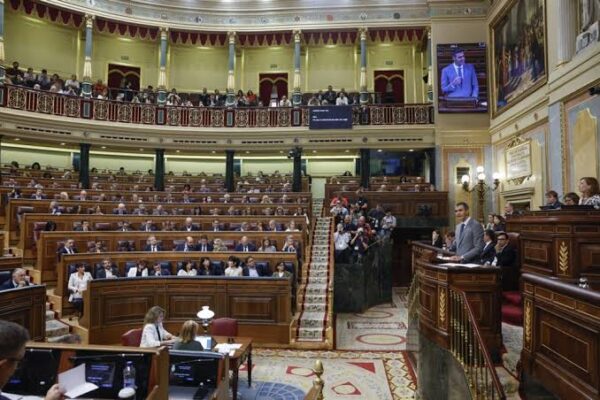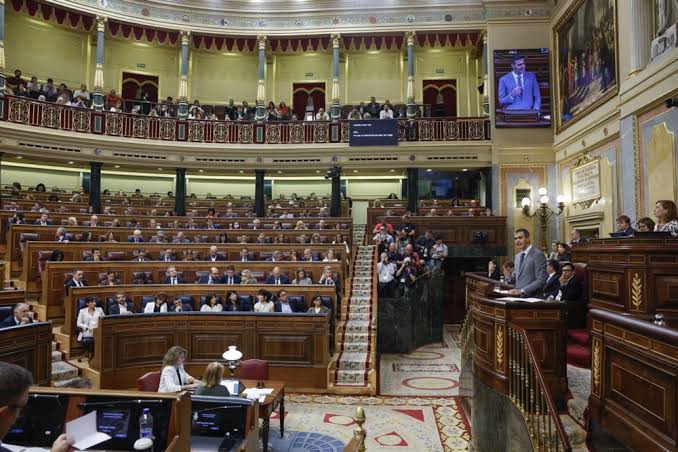
Spain’s government lost its housing decrees in Congress on Friday, called an election on Monday and re-approved near-identical decrees on Tuesday. On Wednesday they hit the BOE, and one of them may never take effect.
Four days that changed the housing debate
- Friday 2 October: Congress rejected the rental-renewal decree 184–166 and the broader housing decree 178–172.
- Monday 5 October: Pedro Sánchez called a snap general election for 29 November.
- Tuesday 6 October: The cabinet approved two new decrees, which the government says keep the essence of the rejected ones with some changes and additions.
- Wednesday 7 October: The BOE published both.
Two decrees, two different fates
The general housing decree enters into force on Thursday 8 October. Among its measures:
- State-backed loans for first-time buyers, covering the lower of 20% of the property’s value or €50,000. They sit alongside a private mortgage, and homes bought with them stay subject to a permanent maximum resale price.
- Eviction suspensions until 31 December 2030 for vulnerable households with no alternative housing, where the owner is an investment fund.
It must still be validated within 30 days of publication, or it falls.
The rental-renewal decree (RDL 28/2026) is set to enter into force on 15 November, but only if it is validated first. Sánchez himself acknowledged it doesn’t currently have majority support. Reporting suggests validation is unlikely, because both Junts and the PNV rejected the original version.
The arithmetic: 69 members, one seat
With parliament dissolved, validation falls to the Diputación Permanente, a 69-member body that keeps Congress’s functions during an election period. Its balance is much closer than the full Congress. PSOE, Sumar, ERC, Bildu, PNV and Podemos hold 35 seats there, against 34 for the PP, Vox and Junts.
That makes Junts’s opposition far less decisive than it was on Friday, but the government still needs the PNV’s vote. The PNV voted against the rental decree last week.
No vote date has been fixed. The Diputación Permanente has 30 days from publication, which puts the deadline in early November.
The calculation behind it all
BBC analysis describes the election call as a carefully thought-out manoeuvre, not a reflex reaction. The reasoning:
- Housing is the biggest concern for Spaniards in polls, and it looks more likely to mobilise the left.
- It moves the debate away from the Ceuta crisis and corruption allegations that have dogged the government.
- Polls still show the Socialists trailing the PP, and the BBC says staying in power after November will probably be the biggest challenge of his career.
The PP and Vox, for their part, tend to oppose direct market intervention and warn that it can be counterproductive. Some real estate firms have called the new decrees improvised and lacking parliamentary consensus.
Legal, but contested
Using the Diputación Permanente to approve decrees Congress just rejected is a legitimate constitutional route. It is also politically explosive. Critics ask whether a smaller body should be able to approve what the full chamber just voted down, before voters have their say. The government argues urgent protections can’t be left in limbo during a campaign, and Sánchez has framed the issue as one of humanity.
What it means for landlords, agents and buyers
- Rental contracts: Nothing changes today. The old rental rules still apply, and the renewal decree can’t take effect before 15 November, if at all.
- First-time buyers: If the general decree survives validation, the €50,000 loans and permanent resale caps could affect the lower end of the market. It’s worth watching whether it applies to the segments you serve.
- Agents: Contract expiry dates and notice periods are worth reviewing now, because the rules could change again after the Diputación Permanente votes and again after the election.
NLS Conclusion
Voters were supposed to settle Spain’s housing debate on 29 November. Instead, a 69-member committee may settle part of it first. The dates to watch are the Diputación Permanente vote, 15 November (the rental decree’s start date, if validated) and 29 November (election day).
Sources: BBC (Guy Hedgecoe); The Olive Press; Euro Weekly News; Público; Newtral; The Objective; Diario de Avisos/El Español; Naiz.