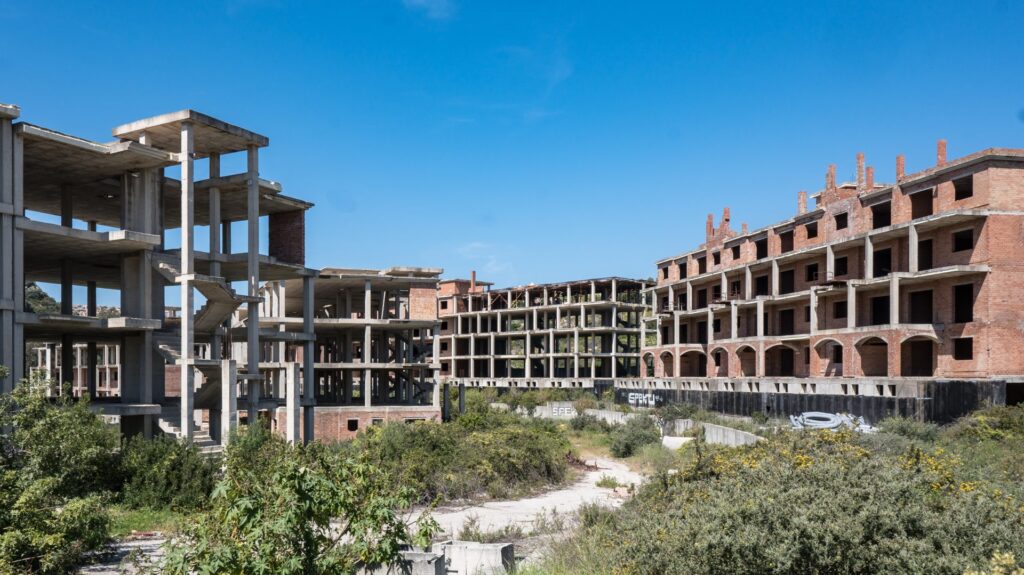
Marbella is taking a decisive step to reshape its urban landscape.
In a move aimed at protecting long-term property values and reinforcing its position as a leading European lifestyle destination, Marbella Town Hall has approved a powerful new regulation targeting abandoned developments, unfinished construction projects, vacant urban plots, and neglected buildings across the municipality.
The bylaw, which came into force in April 2026, gives the council far-reaching authority to intervene when property owners fail to meet their legal obligations to build, maintain, or restore urban assets. It represents one of the strongest enforcement tools introduced in Marbella in recent years and forms part of a broader strategy to modernise infrastructure, enhance urban aesthetics, and strengthen investor confidence in the local real estate market.
New Municipal Register Created
At the centre of the regulation is the creation of the Municipal Register of Vacant Plots and Dilapidated Buildings (RMSER).
This register will identify and monitor properties that are in breach of urban planning or conservation obligations.
The register includes:
1. Vacant Urban Plots
Urban land with infrastructure and services in place that remains undeveloped.
2. Paralysed Construction Projects
Developments where building has started but been abandoned or suspended—particularly where licences have expired, been revoked, or cancelled.
3. Deficient Buildings
Properties lacking adequate habitability, structural safety, hygiene, or health standards, or those ignoring municipal repair orders.
4. Ruinous Buildings
Structures officially declared in ruin under Andalusian planning law.
For years, these types of assets have negatively impacted Marbella’s urban image—especially in high-value areas where unfinished projects can directly affect surrounding property prices.
Owners Given 12 Months to Act
Once a property is listed in the RMSER register, owners will be formally notified and typically given 12 months to comply.
They may be required to:
- Begin construction on vacant plots
- Resume or complete stalled developments
- Repair or restore deteriorating buildings
- Demolish unsafe structures
- Apply for new licences where required
This aligns with Spain’s legal principle known as the “duty to preserve and build.”
Marbella Can Force Sale or Intervene
If owners fail to act within the deadline, Marbella Town Hall now has multiple enforcement mechanisms:
Forced Sale
The property can be placed on the market through compulsory sale procedures.
Public Auction
Assets may be sold via public auction.
Execution by Substitution
The council—or an authorised third party—can carry out construction, repairs, or demolition, with costs charged back to the owner.
Municipal Acquisition
If no buyer is found, the council may acquire the property for public use or municipal land reserves.
In urgent cases involving public safety or health risks, intervention can occur immediately without waiting for the 12-month compliance period.
Why Marbella Is Taking Action Now
Marbella has long faced challenges with abandoned plots and unfinished developments—many dating back to the 2008 financial crisis, planning disputes, or failed projects.
These properties often become:
- Visual eyesores in premium locations
- Targets for vandalism and graffiti
- Illegal dumping zones
- Health and sanitation risks
- Safety hazards for residents and pedestrians
For a market positioned at the top tier of European real estate, such urban decay directly contradicts Marbella’s global image and can weaken both tourism appeal and property values.
The council’s objective is clear: improve aesthetics, safety, and sanitation, while protecting the town’s long-term urban reputation.
Impact on Marbella Property Market
This regulation is expected to significantly affect:
- Landowners holding undeveloped plots
- Developers with stalled projects
- Banks and funds managing repossessed assets
- Investors targeting distressed opportunities
For buyers and investors, due diligence becomes critical.
Before acquiring any asset, it will be essential to verify:
✔ Licence status
✔ Urban classification
✔ Municipal obligations
✔ Deadlines or penalties attached
✔ Whether the property is listed on RMSER
At the same time, the regulation may unlock new market opportunities.
Forced sales and auctions could release previously inactive or “stuck” assets back into circulation—potentially increasing liquidity in Marbella’s development and investment segments.
Wider Context: Marbella’s Urban Transformation
This move forms part of a broader transformation strategy across Costa del Sol.
Alongside this regulation, Marbella has recently approved over €17 million in hotel renovation investments, signalling a clear direction:
➡ eliminate urban decay
➡ encourage high-quality redevelopment
➡ attract sustained international investment
The message is clear—Marbella is tightening standards while raising the overall quality of its built environment.
NLS Conclusion: A Stronger, Safer and More Transparent Market
At The NLS (National Listing Service), this regulation represents a major structural improvement for the Marbella property market.
By forcing inactive and problematic assets back into circulation, Marbella stands to benefit from:
✔ stronger neighbourhood appeal
✔ improved legal clarity
✔ higher buyer confidence
✔ increased investment security
✔ long-term asset appreciation
For agents, developers, and investors, access to accurate, verified property data will become more important than ever.
As enforcement tightens, the ability to identify:
- legally compliant listings
- active developments
- verified properties
- genuine investment opportunities
…will define market leaders.
The future of Costa del Sol real estate is no longer just about listings.
It’s about verified listings.
And that is exactly where The NLS is positioned to lead.