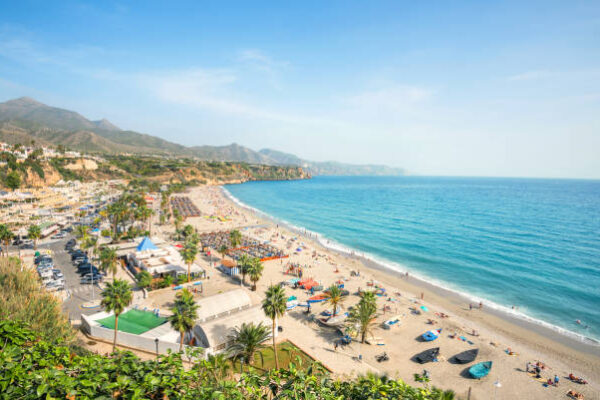
The Balearic Islands – comprising key markets such as Mallorca, Ibiza, and Menorca — continue to demonstrate one of the clearest examples of supply-constrained real estate economics in Europe. Unlike mainland coastal regions where development pipelines can expand in response to demand, the Balearics operate within a structurally restricted environment where supply growth is tightly controlled, slow, and often politically sensitive.
This imbalance between supply and demand is not new — but it is intensifying. Over the past 3–5 years, a combination of regulatory, environmental, and social factors has significantly reduced the ability of developers to bring new inventory to market.
According to data from Savills and Knight Frank:
- Prime residential prices in Ibiza increased by approximately 10–15% during 2025
- Mallorca recorded high single-digit to low double-digit growth, depending on location and asset quality
- Inventory levels across prime segments remain critically low, typically ranging between 4 to 6 months of available stock
In real estate terms, inventory below 6 months is widely considered a seller’s market, where demand consistently outpaces supply and pricing power shifts toward vendors.
Structural Constraints Behind Limited Supply
The Balearics face a unique combination of constraints that differentiate them from other Mediterranean markets:
1. Planning and Zoning Restrictions
Local governments enforce strict building regulations to preserve landscape integrity and control urban expansion. In many areas, particularly coastal zones, new development is either heavily restricted or entirely prohibited.
2. Environmental Protections
Large portions of land are designated as protected природные zones, limiting construction opportunities and ensuring that supply cannot expand to meet demand.
3. Approval Timelines
Development approvals can take between 2 to 5 years, significantly delaying new projects and reducing the responsiveness of supply to market conditions.
4. Community and Political Pressure
There is growing local resistance to overdevelopment and mass tourism, leading to tighter controls on new projects, short-term rentals, and land use.
These factors collectively create a structural ceiling on supply, meaning that even in periods of strong demand, inventory cannot increase rapidly.
Demand Remains International and Resilient
Despite these constraints — or more accurately, because of them — demand remains exceptionally strong.
International buyers dominate the high-end сегмент, with key groups including:
- German and Scandinavian buyers (long-standing presence)
- British buyers (post-Brexit lifestyle relocation)
- Swiss and French high-net-worth individuals
- Increasing participation from U.S. and Middle Eastern buyers
These buyers are not primarily driven by short-term investment returns. Instead, they are motivated by:
- Lifestyle quality
- Privacy and exclusivity
- Long-term capital preservation
This behavioural pattern reinforces price stability. When demand is driven by wealth preservation rather than speculation, markets tend to exhibit lower volatility and stronger long-term appreciation.
Market Polarisation Is Increasing
One of the most important emerging dynamics in the Balearics is market polarisation.
The gap between asset types is widening:
Prime / Turnkey Assets
- Modern, renovated, or new-build properties
- Strong design and energy efficiency
- Premium locations (sea views, proximity to Palma/Ibiza Town)
→ These assets are achieving strong price growth and fast sales cycles
Secondary / Legacy Stock
- Older properties requiring renovation
- Less efficient layouts or locations
→ Slower absorption and increasing price sensitivity
This divergence reflects a broader global trend but is amplified in the Balearics due to limited supply. Buyers can afford to be selective — and they increasingly are.
🔎 The NLS Conclusion – Strategic Playbook
The Balearics are transitioning into a controlled-supply, high-quality luxury market, comparable to Monaco, certain Alpine regions, or parts of the Côte d’Azur.
This has profound implications for agents.
1. Scarcity Creates Price Floors — But Not for All Assets
Limited supply provides strong downside protection, but only for properties that meet modern expectations.
- Prime assets → strong liquidity and price resilience
- Secondary stock → increasing pressure and longer sale times
Agents must avoid assuming that “everything goes up.”
The market is becoming more selective.
2. Stock Selection Is Now the Primary Competitive Advantage
In volume markets, marketing drives success.
In constrained markets, what you list matters more than how you sell it.
Agents should prioritise:
- Prime locations
- Turnkey condition
- Strong design and energy performance
Poor-quality listings will absorb time and reduce overall efficiency.
3. Pricing Strategy Must Be Asset-Specific
There is no longer a “market price” — there are micro-markets within each сегмент.
- Prime assets can be priced confidently
- Secondary stock must be priced realistically from day one
Overpricing weaker assets in a selective market leads to stagnation.
4. Off-Market Networks Will Dominate
In supply-constrained environments:
- The best properties often never reach public portals
- Relationships become more valuable than advertising
Agents with strong local networks will consistently outperform.
5. Long-Term Outlook (2026–2030)
The Balearics are likely to:
- Continue experiencing supply constraints
- See gradual but consistent price growth in prime assets
- Become increasingly attractive to global wealth seeking stability
Final NLS Position
The Balearics are not just expensive — they are structurally exclusive.
This is a market where:
- Scarcity protects value
- Quality defines performance
- Access determines success
Agents who understand this shift will operate at a higher level — focusing less on volume and more on precision, positioning, and premium deal-making.